Furniture Is Hard to Sell. So What Actually Gets Shoppers to Buy?
Consumers are cautious, furniture is complex, and every purchase comes with reasons to hesitate. So what can brands and retailers actually do to make saying “yes” easier?
Furniture has never been an easy purchase.
It’s expensive. It’s personal. It has to fit a specific space and a specific life. And when customization enters the picture, a single product can come with hundreds or even thousands of possible combinations.
Right now, there’s another challenge: shoppers are being careful about where their money goes.
Recent research on younger furniture shoppers makes that particularly clear. More than half of surveyed consumers aged 18–29 said they had delayed a major purchase such as furniture because of their financial situation, while six in ten said price was the main factor in their furniture purchases.
So how do you sell a complex, considered product to a customer who already has plenty of reasons to wait?
Furniture Is Hard to Sell. That's Not Necessarily a Bad Thing.
Ray Allegrezza recently tackled this question from another angle in Furniture Today in a column titled “Furniture is hard to sell; that’s the point.”
His argument is worth paying attention to.
Furniture isn't a simple product, and selling it well requires skill. The complexity of the purchase is precisely why knowledgeable salespeople, representatives and people who understand the product remain so important.
Technology shouldn't try to change that.
But it does raise another question:
How much of that complexity actually needs to reach the customer?
There is a difference between the complexity that makes furniture worth selling well and friction that simply makes furniture harder to buy.
A great salesperson can help someone choose the right sofa.
They shouldn't have to spend that conversation fighting with product codes, trying to explain what an unseen configuration will look like, searching for a price or asking the customer to imagine the finished room.
That's where the opportunity is.
A Hesitant Shopper Needs More Than a Discount
When consumers are cautious, lowering the price can seem like the most obvious way to get them to buy.
And price absolutely matters.
But for a considered purchase, the question isn't always simply:
“Is this cheap enough?”
It's also:
“Is this worth it?”
And answering that question requires confidence in what you're buying.
A shopper considering a sectional might wonder:
Will it fit?
Is this the right configuration?
What will this fabric actually look like across the entire piece?
Will it work with the rest of the room?
What will my final configuration cost?
Am I sure enough about all of this to spend thousands of dollars?
Each unanswered question creates another opportunity to say:
“Let me think about it.”
Make Complex Products Easier to Understand
Furniture itself doesn't need to become simpler.
The experience of buying it can.
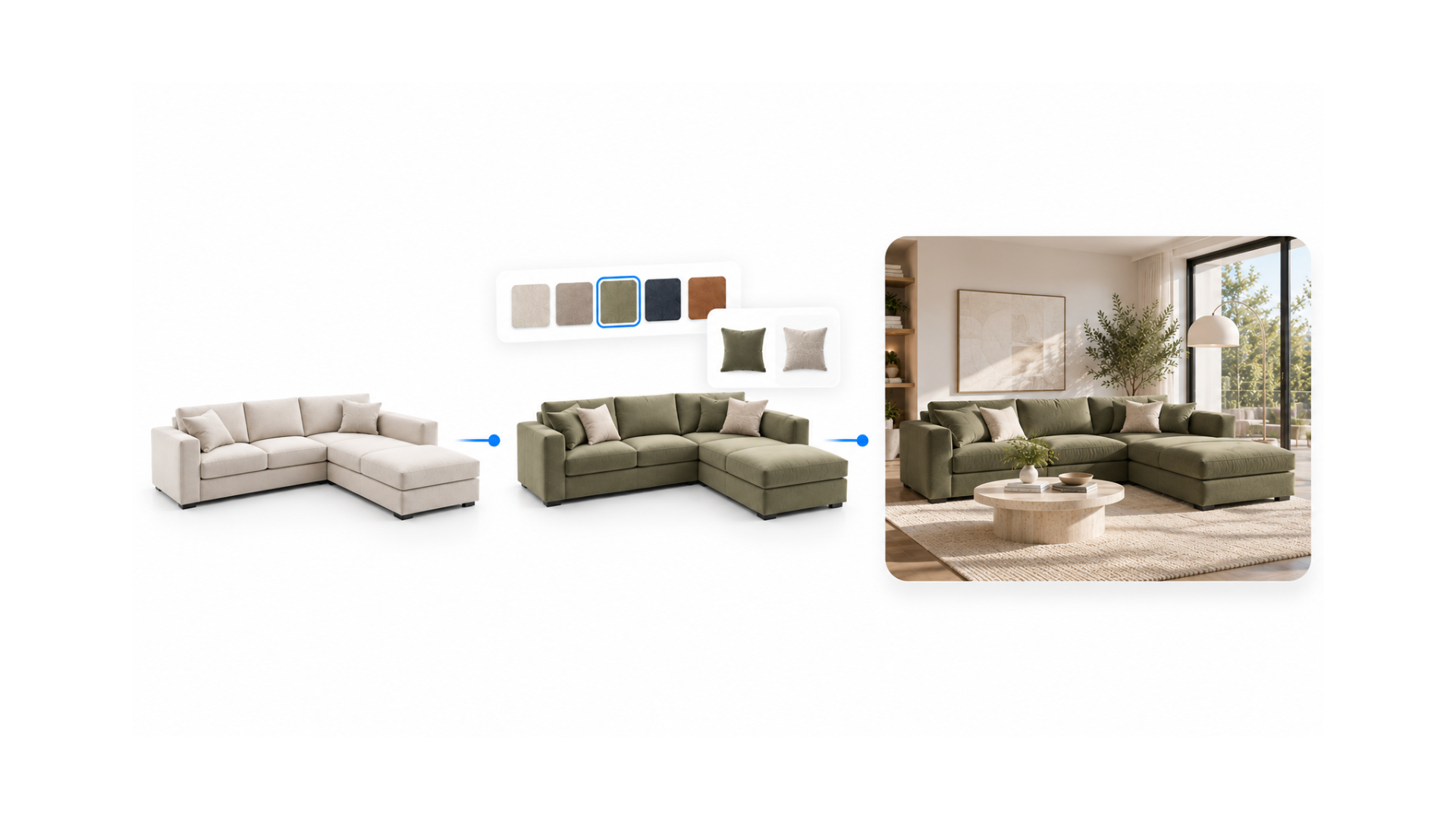
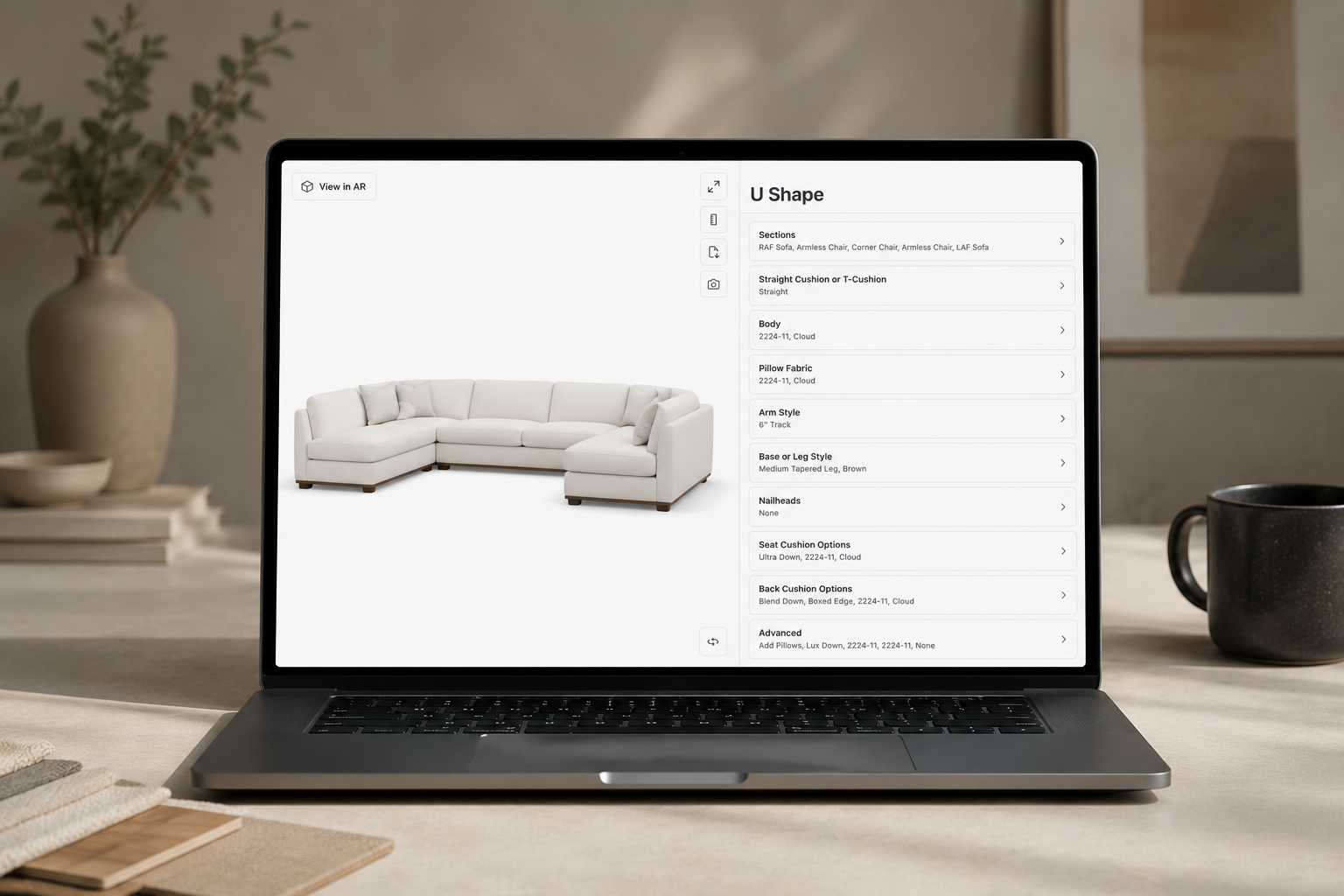
Consider a configurable sectional. Depending on the manufacturer, the customer may be choosing between multiple pieces, layouts, fabrics, finishes and options.
Traditionally, much of the work of assembling those possibilities happens in the shopper's imagination, often with help from swatches, samples, catalogs and a salesperson.
Interactive 3D configuration changes that.
Instead of explaining what a particular combination could look like, the customer can see it.
They can build a configuration, change the upholstery, explore available options and understand how their choices affect the finished product in real time.
The product remains just as sophisticated.
The customer simply has to work less hard to understand it.
Help Them Answer the Biggest Question: “What Will It Look Like in My Home?”
Even after a shopper understands the product, there is another leap to make.
They have to imagine living with it.
Furniture is unusually dependent on context. Size, layout, flooring, wall color, lighting and the furniture already in the room can completely change how a product feels.
This is why visualization is becoming such an important part of the furniture shopping experience.
With room-design tools such as Arrange3D, the conversation can move from “try to imagine it” to “let's see it.”
A shopper can start with their room, remove existing furniture, add actual products from a manufacturer's catalog, explore configurations and materials, arrange the space and generate a photorealistic visualization of the finished design.
That doesn't replace the person helping them make the decision.
It gives that person something much better to sell with.
Instead of discussing an abstract possibility, salesperson and customer can look at the same room and make decisions together.
Make Customization Feel Like an Advantage
Customization is one of furniture's biggest strengths.
It's also one of the easiest places to overwhelm a shopper.
More choice can make a product more desirable, but only if customers can understand those choices.
Hundreds of fabrics sound fantastic until someone has no idea where to begin.
Multiple sectional pieces create flexibility until the customer can't figure out which combination works.
Options add value until understanding them becomes work.
The best experience doesn't eliminate choice. It makes choice manageable.
Let the system keep track of what is possible.
Let the salesperson help the customer decide what is right.
Don't Lose the Customer at the Price Question
Eventually, every sales conversation reaches the same point.
“How much is it?”
For configurable furniture, the answer isn't always simple.
The final price may depend on the configuration, fabric grade, finishes, options, retailer program and other pricing rules.
And if a customer has spent time getting comfortable with a product, choosing their configuration and deciding they want it, this is a particularly bad moment to introduce friction.
They shouldn't have to wait while someone sends the configuration elsewhere for a quote.
Pricing should move with the product.
Connecting configuration with accurate pricing and quoting through tools such as AI CPQ allows the salesperson to keep the conversation moving while the customer is engaged.
The technology handles the rules behind the price.
The salesperson handles what comes next.
Technology Should Give Salespeople More Time to Sell
This brings us back to Allegrezza's point.
Furniture still needs good salespeople.
In fact, the more considered the purchase, the more valuable good selling becomes.
A configurator doesn't know that the customer has three children and is worried about choosing the wrong upholstery.
A room visualization doesn't know that the couple shopping together can't agree on a sectional layout.
A pricing engine doesn't recognize when someone is almost ready to buy but needs reassurance before committing.
People do.
The role of technology isn't to automate those conversations away.
It's to remove the things that get in their way.
Product rules can happen in the background. Configurations can be visualized instantly. Rooms can be shown rather than imagined. Pricing can be calculated without interrupting the conversation.
That leaves the salesperson with more time for the part that actually requires a person: understanding the customer and helping them make a decision.
Furniture May Be Hard to Sell. It Doesn't Have to Be Hard to Buy.
Consumers are still careful. Furniture remains a significant purchase. And shoppers have plenty of reasons to postpone a decision.
Brands and retailers can't control all of those reasons.
They can't control consumer confidence, the housing market or what someone has in their bank account.
But they can control what happens when a shopper is interested.
They can make complex products easier to understand. They can make customization easier to explore. They can show customers what products will actually look like in their homes. They can make accurate pricing easier to access.
And they can give salespeople better tools to do what they do best.
Furniture may always be hard to sell.
That doesn't mean we should make it hard to buy.

Related posts

Interested in our solutions?