Black Friday Starts Long Before November: How Furniture Manufacturers Can Prepare Now
Every November, consumers see discounts, promotions, and polished marketing campaigns. What they don't see is the months of preparation behind them. For furniture manufacturers, Black Friday success isn't determined by what happens during the sale - it's determined by the work completed weeks or even months beforehand. As August begins, many manufacturers are already preparing pricing, updating product information, creating marketing assets, and coordinating with retail partners. The earlier these processes begin, the more smoothly the busiest shopping period of the year tends to run.

1. Pricing Needs to Be Ready Before Customers Arrive
Black Friday pricing isn't simply about applying a discount.
Manufacturers often need to:
- Create promotional price lists
- Support multiple retailer pricing programs
- Coordinate MAP policies where applicable
- Ensure dealers have accurate pricing
- Validate configuration-specific pricing
When pricing changes are managed manually across multiple channels, errors become much more likely during periods of high demand.
2. Product Data Shouldn't Become a Bottleneck
Retailers expect accurate product information before promotions go live.
That means ensuring:
- Product descriptions are current
- Dimensions and specifications are accurate
- Available options are up to date
- New collections are fully documented
- Product attributes remain consistent across every channel
Incomplete or inconsistent product data creates unnecessary friction just when customers expect a seamless buying experience.
3. Marketing Teams Need Hundreds of Assets
Black Friday campaigns often require:
- Lifestyle imagery
- Product cutouts
- Room scenes
- Banners
- Social media graphics
- Email content
- Retailer-specific creative
Producing these assets manually can quickly become one of the largest bottlenecks in campaign preparation.
4. Retailers Need Answers Quickly
As promotions launch, retailers typically ask:
- Is this fabric included?
- What's the lead time?
- What's the configured price?
- Can this option be combined with that feature?
The faster manufacturers can provide accurate answers, the smoother the buying experience becomes.
5. Test Before the Rush
Before traffic increases, manufacturers should review:
- Product configuration workflows
- Pricing accuracy
- Dealer portals
- Website performance
- Product imagery
- Quote generation
- Customer journeys
Finding problems in August is significantly easier than discovering them during Black Friday week.

How AI Can Help Manufacturers Prepare for Black Friday
Artificial intelligence isn't a single tool, it's a collection of capabilities that can remove bottlenecks across the entire product journey. From onboarding new collections to supporting dealers with accurate pricing, AI can help manufacturers prepare for peak season faster and with fewer manual tasks.
Accelerate Product Onboarding
Preparing for Black Friday often means launching new products, updating existing collections, or introducing promotional assortments. Traditionally, that requires teams to manually organize specifications, attributes, dimensions, finishes, pricing, and compatibility rules.
AI can significantly reduce that effort by extracting and structuring product information from existing documents, making onboarding faster while still allowing teams to review and validate the results before publication.
Generate Marketing Assets in Minutes, Not Weeks
Black Friday campaigns demand an enormous volume of creative assets - from website imagery and retailer content to email banners and social media posts.
With AI-powered image generation, manufacturers can create lifestyle scenes, product cutouts, and marketing visuals without waiting for every photoshoot. Instead of producing one image at a time, marketing teams can generate hundreds of variations for different products, finishes, fabrics, and campaigns.
This allows teams to respond quickly to changing promotions while keeping visual content consistent across every channel.
Simplify Complex Pricing with AI CPQ
One of the biggest challenges leading up to Black Friday is pricing.
Manufacturers often need to support multiple retailers, dealer programs, promotional pricing, configurable products, and approval workflows - all while ensuring quotes remain accurate.
AI CPQ helps simplify that complexity by understanding product rules and pricing logic, allowing sales teams and dealers to generate accurate configured pricing in seconds instead of relying on manual calculations or back-and-forth emails.
Rather than replacing existing pricing systems, AI CPQ works alongside them, helping manufacturers deliver faster, more consistent pricing during their busiest season.
Give Dealers a Better Buying Experience
When promotions launch, retailers expect answers immediately.
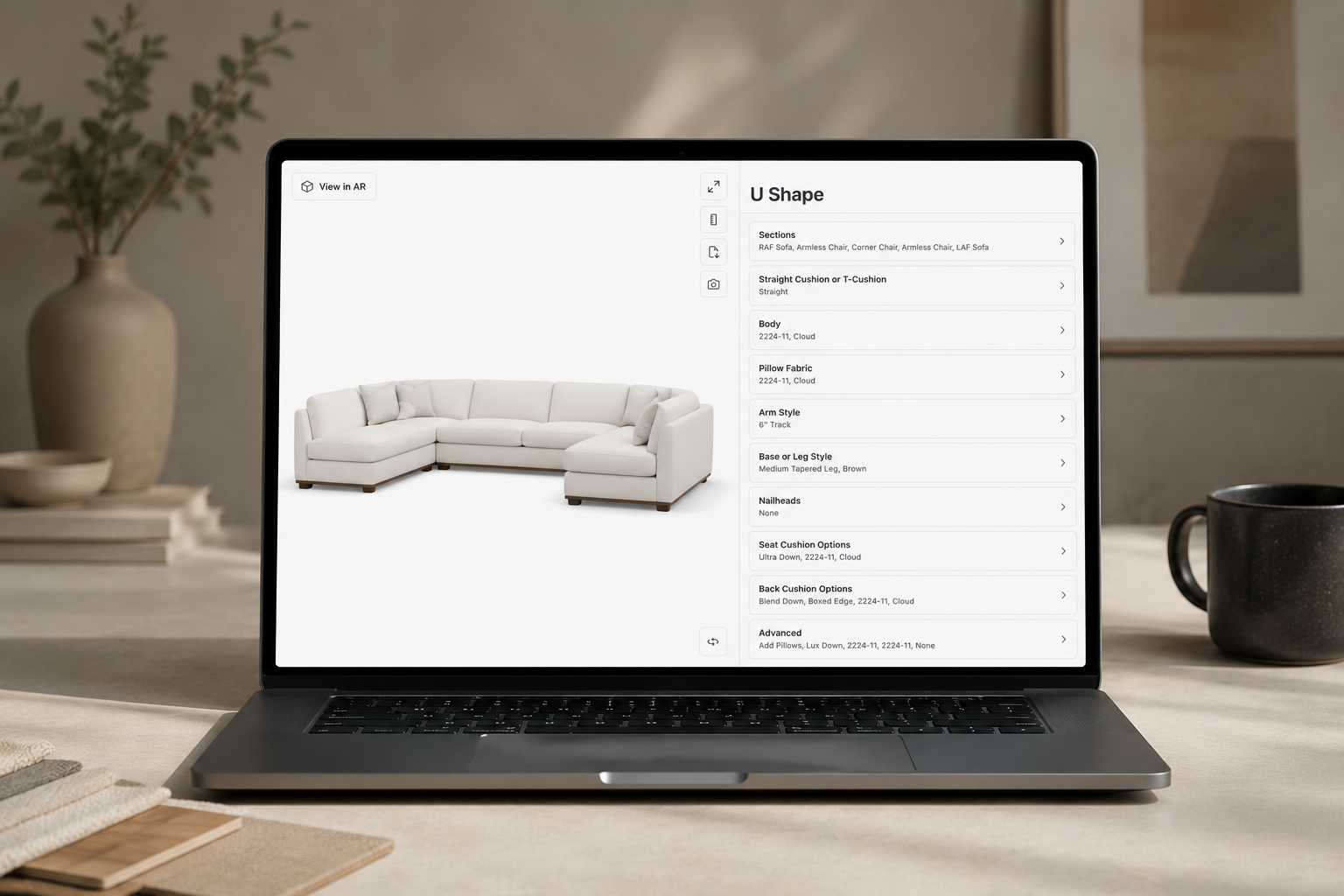
Instead of waiting for product specialists to respond, dealers can use a product configurator to explore available options, visualize products, and validate compatible combinations before submitting a quote request.
Combined with AI-powered pricing, this creates a faster, more self-service buying experience while reducing the number of repetitive questions manufacturers need to answer manually.
Reduce Manual Work Across Teams
Perhaps the biggest advantage of AI isn't doing one task faster—it's reducing manual work across multiple departments simultaneously.
Marketing spends less time creating assets.
Sales spends less time building quotes.
Product teams spend less time preparing product data.
Dealer support spends less time answering repetitive questions.
When each of those small efficiencies adds up, manufacturers are better equipped to handle the increased demand that Black Friday brings.

Black Friday success isn't built in November.
It's built during the weeks and months leading up to it.
Manufacturers that prepare product data, pricing, marketing assets, and customer experiences now are better positioned to meet demand when the busiest shopping season arrives.
Related posts

Interested in our solutions?