5 Questions Furniture Brands Should Be Asking Before High Point Market 2026
Every High Point Market comes with the same big question: What’s new? New collections. New fabrics. New finishes. New introductions designed to get retailers through the showroom door. But heading into Fall High Point Market 2026, there are a few other questions furniture brands should be asking. Because launching a great product is only the beginning. What happens when that product leaves the showroom? Can retailers sell it confidently? Can customers explore all of its options? Can your team price every possible configuration? And is your product data ready for a buying journey that is becoming increasingly digital — and increasingly influenced by AI? Before the industry arrives in High Point this October, here are five questions worth asking.
1. Can retailers actually sell everything you’re about to show them?
Customization is one of furniture’s greatest strengths — and one of its biggest challenges.
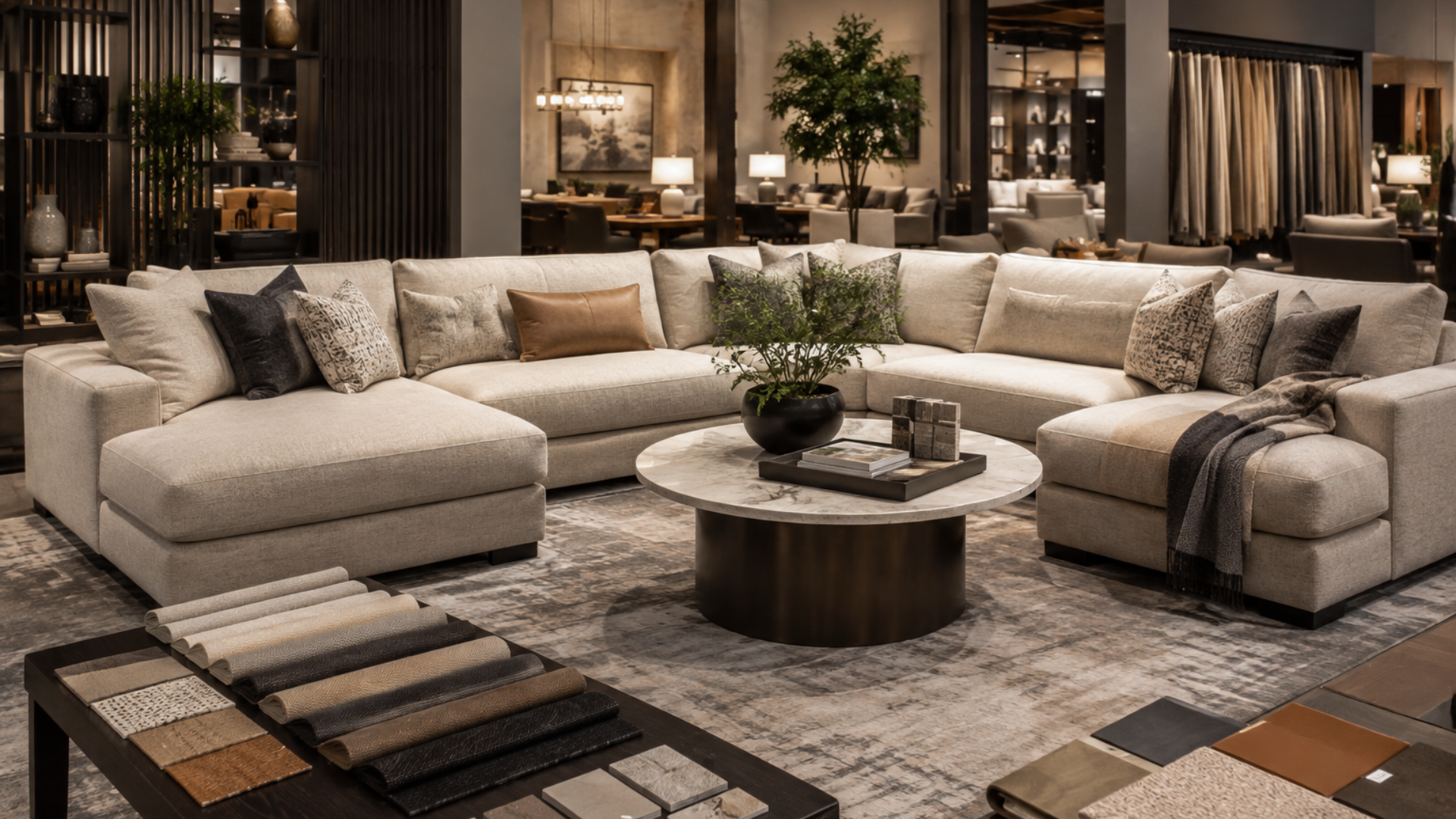
A single sofa shown at Market might be available in dozens or hundreds of fabrics, multiple configurations, finishes, cushion options, leg styles and other variations. On the showroom floor, those possibilities are exciting.
At retail, they can become complicated very quickly.
A salesperson needs to understand what goes with what. A customer needs to imagine an option they may never physically see. And everyone needs confidence that the final configuration is actually possible.
So before asking how many new options you can introduce, ask a different question:
How easy are those options to sell?
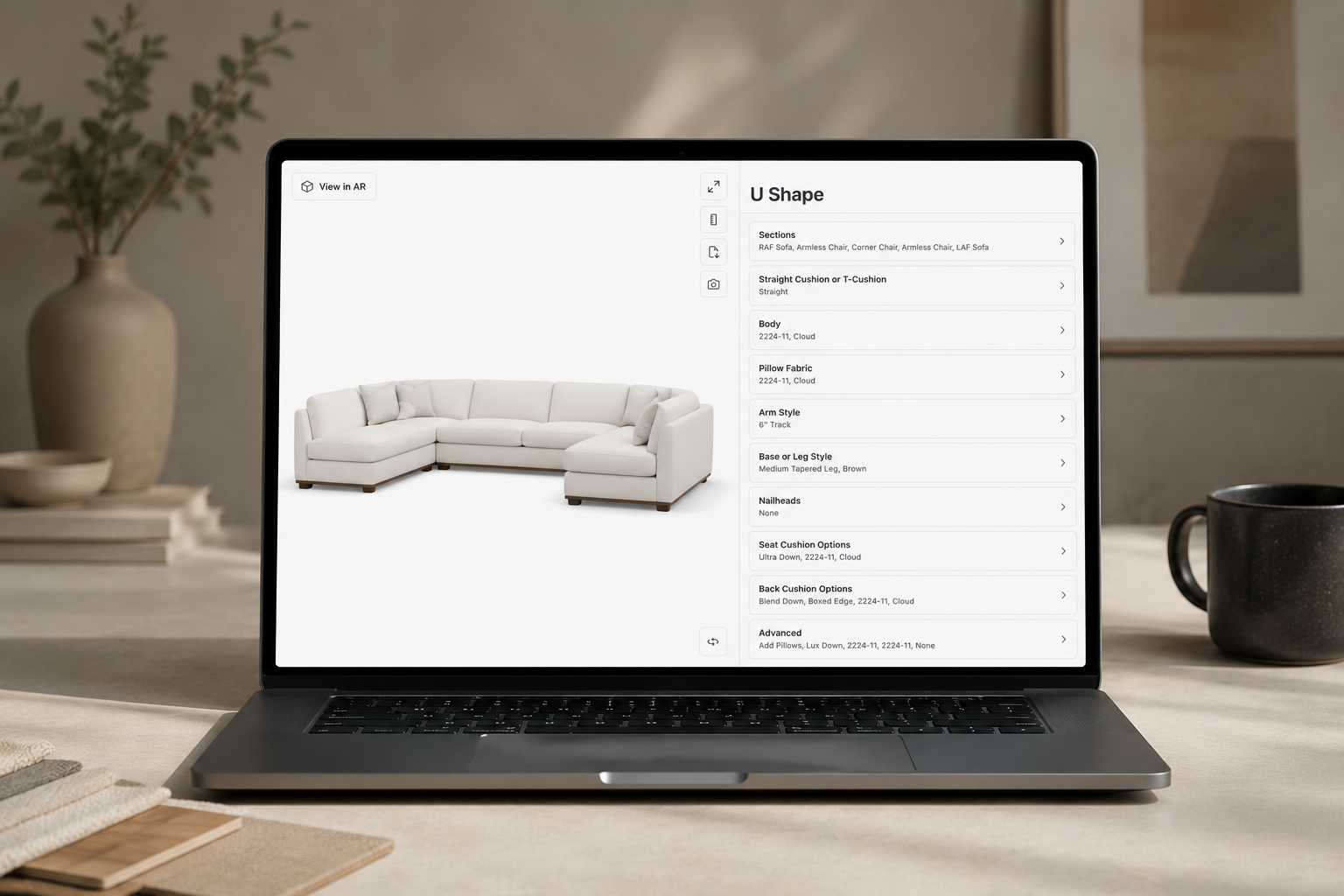
The brands that make customization simple for retailers have an advantage long after Market ends. Digital configuration and visualization can turn a complicated product catalog into a guided selling experience — allowing retailers and their customers to explore more of the assortment without having every possible combination physically on the floor.
2. How quickly can a new introduction go from showroom floor to digital?
Market moves fast.
A retailer discovers a collection. Buyers get excited. Orders are discussed. Photos start appearing online.
But how quickly can that new product become something customers can actually interact with?
If launching a collection digitally still requires months of photography, manual asset creation and individual product setup, there is a gap between introducing a product and giving retailers the tools to sell it.
That gap matters.
A product’s digital launch should increasingly be part of the launch itself — not something that happens afterward.
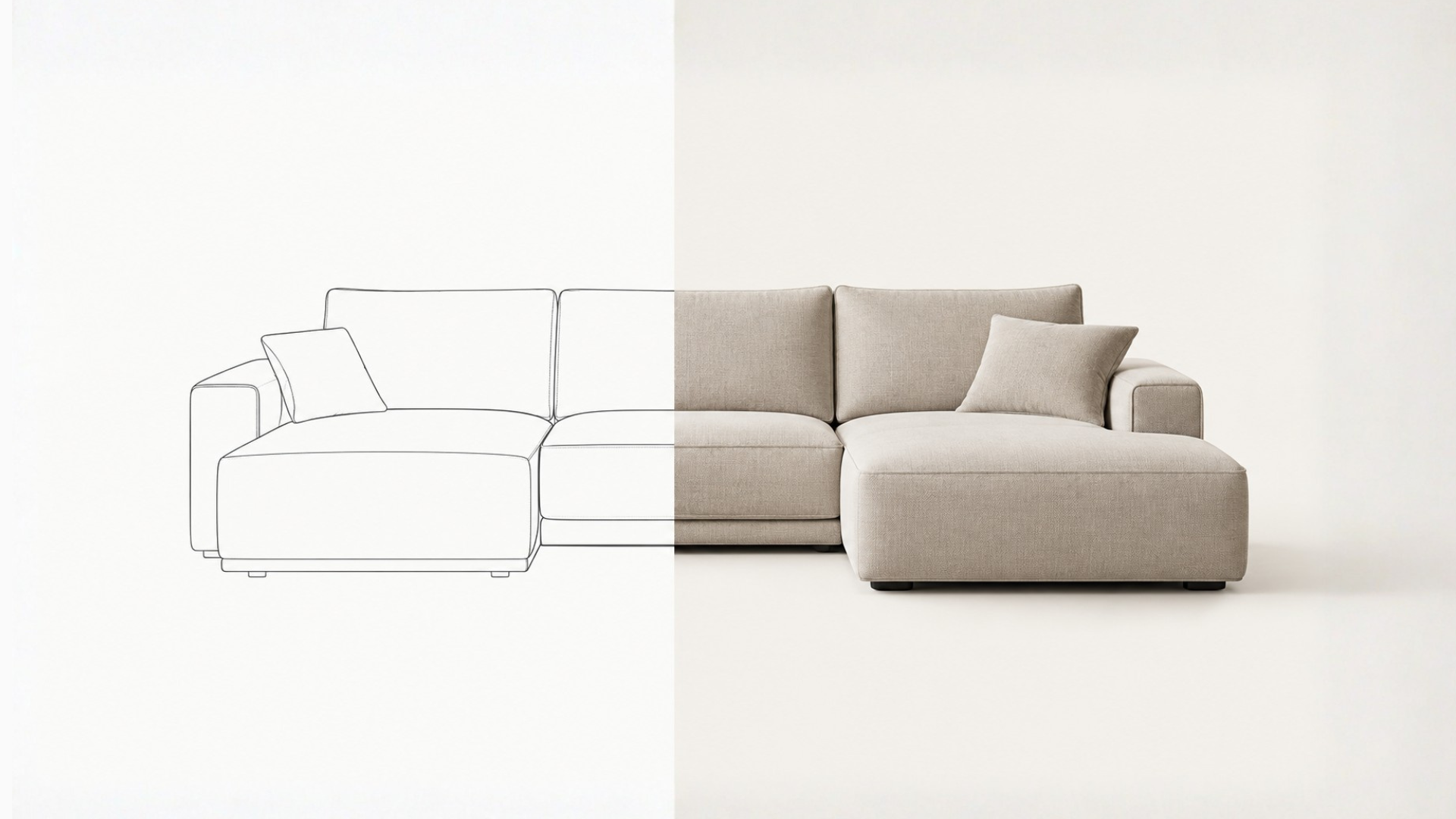
For configurable furniture especially, that means thinking beyond a few product images. Retailers need access to the configurations, materials, dimensions and product information required to take what they saw at Market and bring it to customers.
The showroom launch and the digital launch shouldn't be two separate events.
3. Can your sales channels quote every configuration accurately?
The more configurable the product, the harder this question becomes.
A base price is easy.
A sectional with multiple pieces, fabric grades, finishes, options, retailer programs and pricing tiers is not.
And when pricing becomes difficult to navigate, the consequences aren't limited to back-office inconvenience. Retail salespeople may gravitate toward products that are easier to quote. Quotes take longer. Mistakes become more likely. Manufacturers spend time maintaining spreadsheets, price lists and disconnected systems.
In other words, product complexity can quietly become sales friction.
Brands heading into Market should ask whether their pricing infrastructure has kept up with the products they're selling.
Can a retailer configure a product and immediately know what it costs?
Can pricing changes be reflected consistently across sales channels?
Can different dealers receive the correct pricing without creating another manual process?
This is where AI-powered CPQ can change the equation. Instead of relying on static price lists and manual calculations, AI CPQ can bring configuration and pricing together — giving retailers accurate, configured pricing while manufacturers maintain control over their pricing programs.
The goal isn't simply to offer more choice. It's to make that choice easy to quote, easy to sell and easier to manage.
4. Are you giving retailers and designers what they need after Market?
Market is where retailers and designers discover what's new.
They walk through showrooms, see new collections in person, explore fabrics and finishes, talk to manufacturers and decide which products they want to bring to their own customers.
But eventually, everyone goes home.
And that's when the next part of the selling process begins.
A retailer may only have room to display one configuration on the showroom floor. A designer might remember a piece but need to show a client what it would look like in a completely different fabric. A salesperson may need to explain how a sectional could fit a customer's specific room.
They can't bring the entire High Point showroom with them.
Digital product experiences can.
With interactive 3D visualization, retailers and designers can continue exploring configurations, fabrics, finishes and options long after Market ends — and bring those choices directly into conversations with their customers.
So as you prepare the showroom, samples and introductions you'll bring to High Point, there's another question worth asking:
What are you giving your partners to sell those products once they leave?
5. Is your product catalog ready for how customers will shop next?
This may be the biggest question of all.
Furniture discovery is changing.
Customers still browse retailer websites and search Google, but they're also increasingly using AI tools to narrow choices, compare products and ask highly specific questions.
Instead of searching for “sectional sofa,” a shopper can ask for a sectional that fits an 11-foot wall, works for a family with pets, comes in a performance fabric and stays within a particular budget.
That changes what it means for a furniture product to be discoverable.
A beautiful photograph matters.
But so do dimensions, materials, configurations, compatibility rules, pricing and all of the structured information that explains what the product actually is and what it can become.
For furniture brands, the next phase of digital transformation may be less about simply putting products online and more about making complex catalogs understandable — to retailers, customers, software and AI alike.
High Point is where what's next becomes visible
Fall High Point Market will once again bring thousands of new products, ideas and conversations together in one place.
And there will be plenty of discussion about colors, silhouettes, materials and which introductions will become next season's winners.
But some of the most important questions for furniture brands won't be about what is sitting on the showroom floor.
They'll be about what happens next.
Can retailers sell it?
Can customers experience it?
Can your systems price it?
Can your digital channels represent it?
And can the technology shaping the next generation of commerce understand it?
The brands that can answer those questions aren't just preparing for a successful Market.
They're preparing for what comes after it.

Related posts

Interested in our solutions?