Why Furniture Brands Are Investing in Configurable 3D Assets
A 3D model is no longer just a way to create a product image. For furniture manufacturers, it has become the foundation for configuration, visualization, AI-powered content, and future digital experiences. As these technologies evolve, the quality and flexibility of the underlying asset matter more than ever.

Furniture manufacturers are increasingly using 3D content across sales, marketing, ecommerce, and visualization workflows. As these experiences become more advanced, the structure of the underlying assets becomes just as important as their appearance. A 3D model is no longer simply a way to create a rendering. It is becoming the foundation for how products are configured, visualized, and experienced across multiple channels.
Many furniture brands encounter this challenge when reviewing existing assets. Models originally created for static renderings often need significant adjustments before they can support dynamic product configuration. Missing geometry, embedded materials, incomplete components, or assets designed around a single camera angle may work perfectly for a marketing image but create limitations when products need to support interchangeable fabrics, finishes, dimensions, and options.
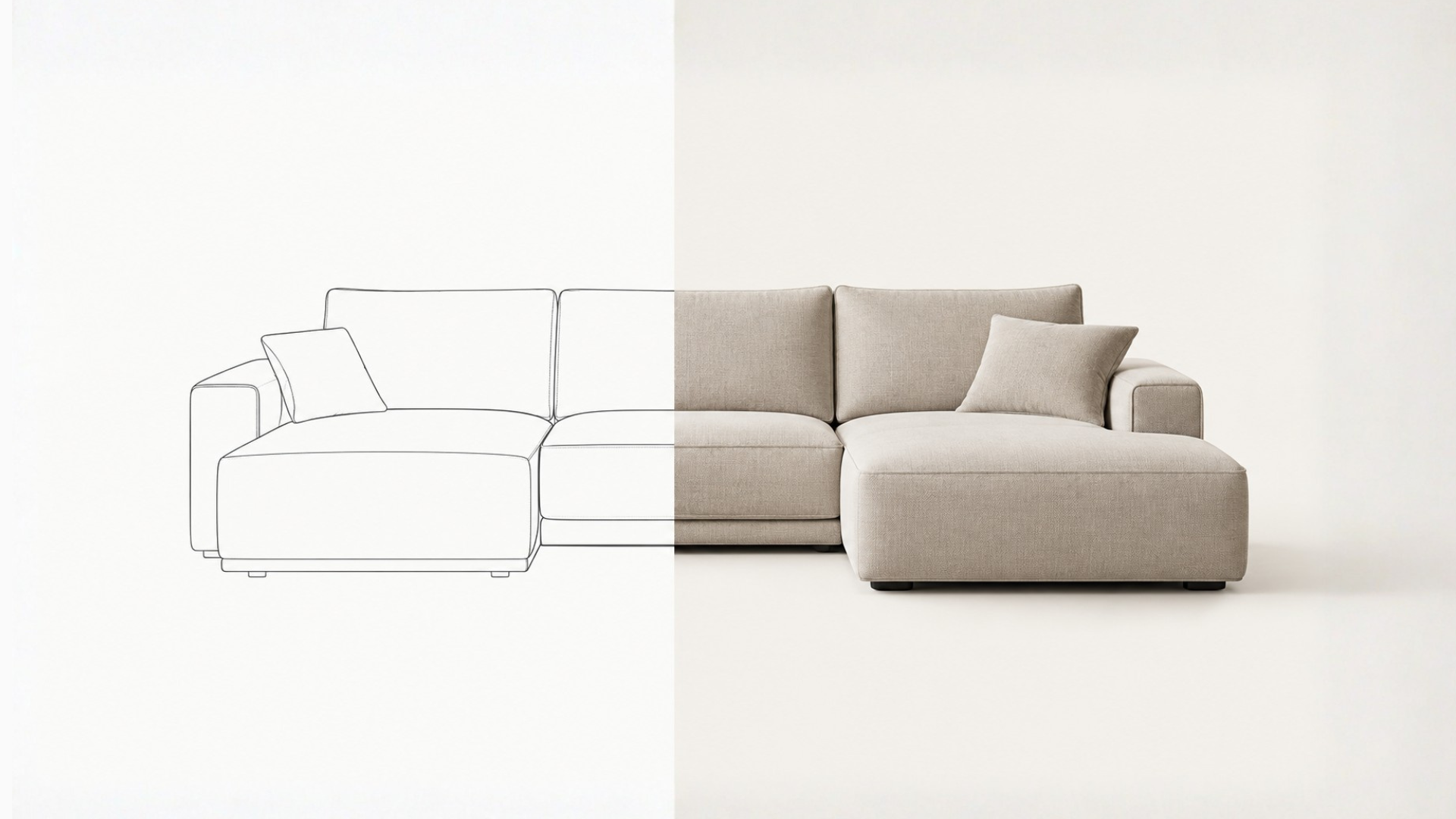
As digital experiences continue to evolve, furniture brands are looking beyond short-term content creation and investing in reusable digital assets that can support future initiatives. The same product model may eventually power configurators, augmented reality experiences, AI-generated imagery, immersive visualization tools, and technologies that have yet to be introduced. The more complete the underlying asset, the more opportunities it can support over time.
Built for Configuration, Not Just Visualization
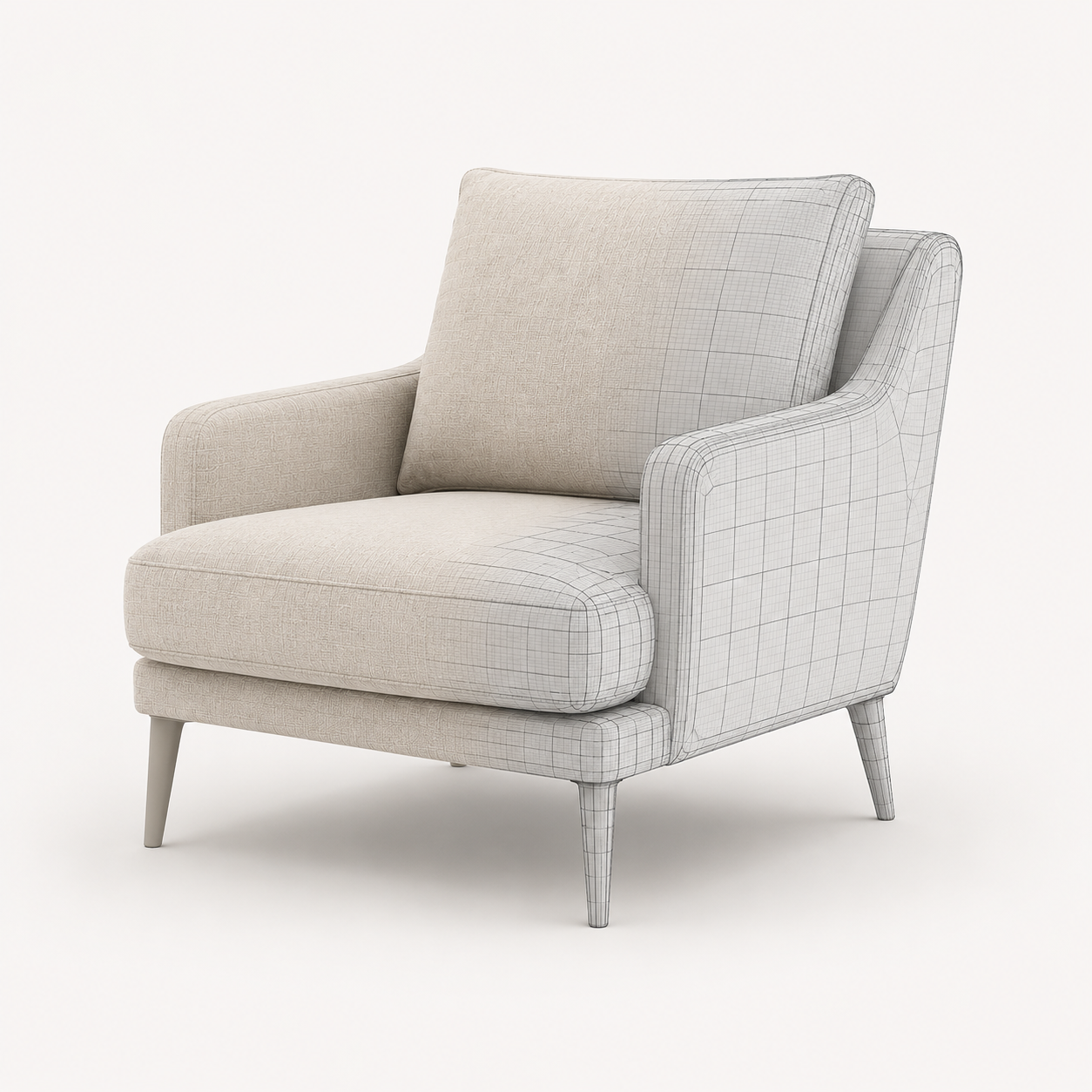
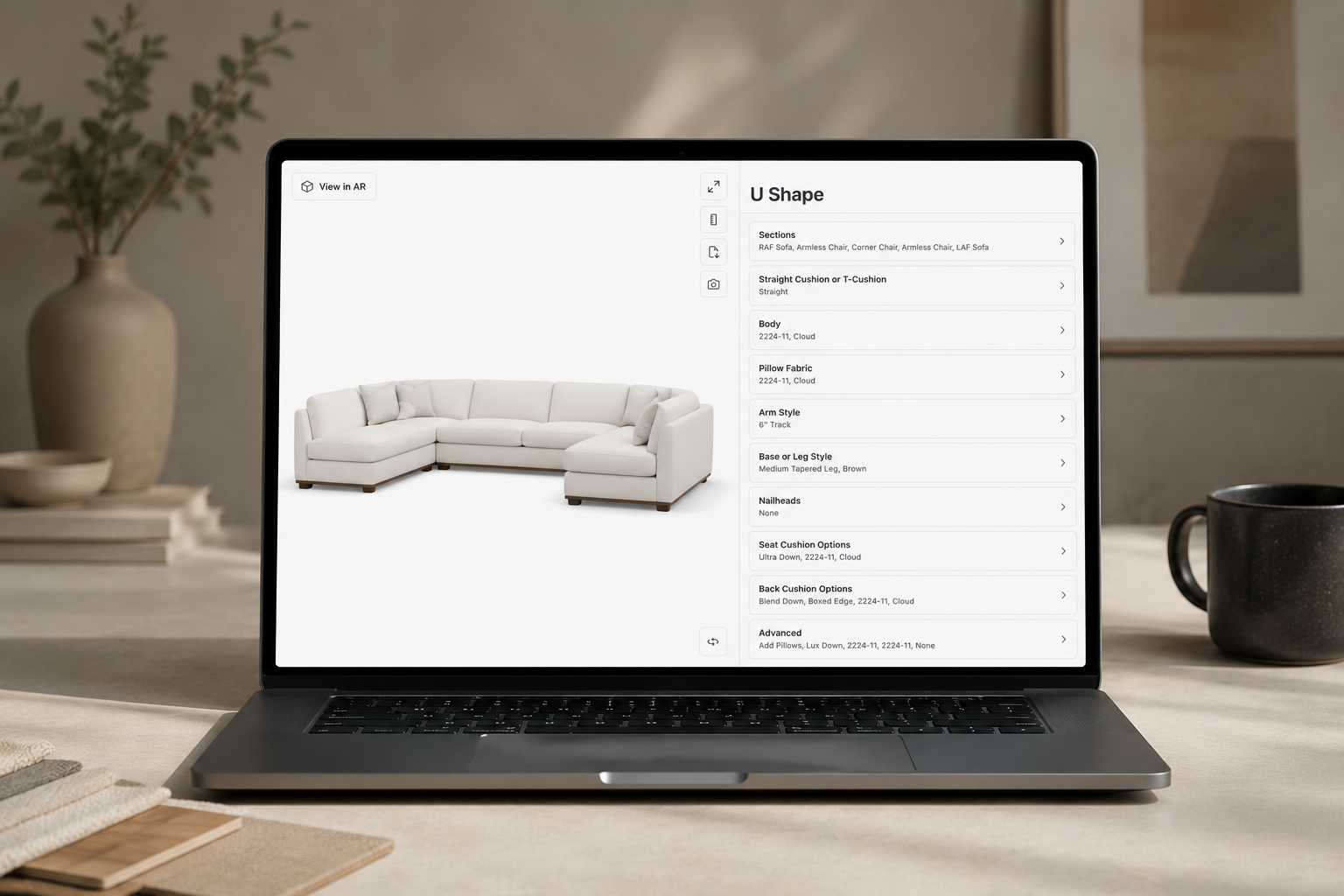
Many 3D assets are created to achieve a specific visual result. Configurable furniture requires a different approach. Fabrics, finishes, dimensions, and components must function as independent elements that can be combined in thousands of valid ways. Rather than relying on shortcuts that only work from a particular angle, configurable assets must be built to function as complete digital products. This additional preparation creates the flexibility needed to support future product changes, content creation, and customer experiences without rebuilding assets from scratch.
The growth of AI-driven content creation has made asset quality even more important. AI systems perform best when they are working from accurate source data. Higher-quality 3D models provide more complete information, reducing guesswork and helping maintain consistency across generated imagery. Instead of replacing the need for well-structured assets, AI is increasing the value of them by creating new ways for furniture brands to use the digital products they have already invested in.
For many manufacturers, the goal is no longer to create a model for a single project. It is to build a digital asset library that can continue supporting sales, marketing, visualization, and emerging technologies for years to come. As new opportunities arise, those assets become a foundation that brands can continue building upon rather than recreating.
Related posts

Interested in our solutions?