Why a 3D Configurator Is the Most Powerful Sales Tool on the Retail Floor
If you work with retail furniture dealers, you already know this: your revenue does not depend only on product quality. It depends on how effectively your dealers and their sales reps can sell that product on the showroom floor. In practical terms, that means one question matters more than most: How easily can a sales rep show every available option, configuration, and dimension in real time? This is where a 3D configurator becomes a competitive advantage, not just a visualization feature.
Retail Selling Has Outgrown Static Tools
Furniture assortments have become significantly more complex. A single product may include multiple sizes, dozens of fabrics, configurable modules, and variations in orientation or finish. At the same time, showroom space remains limited.
Most retail locations can display only a fraction of what a brand actually offers.
That gap creates friction on the sales floor. Sales reps flip through binders, search for swatches, or rely on printed catalogs that may not reflect the latest updates. Customers are asked to imagine how a sectional would look in another fabric or configuration.
As customization becomes standard, static tools slow the sales process and increase the likelihood of error.
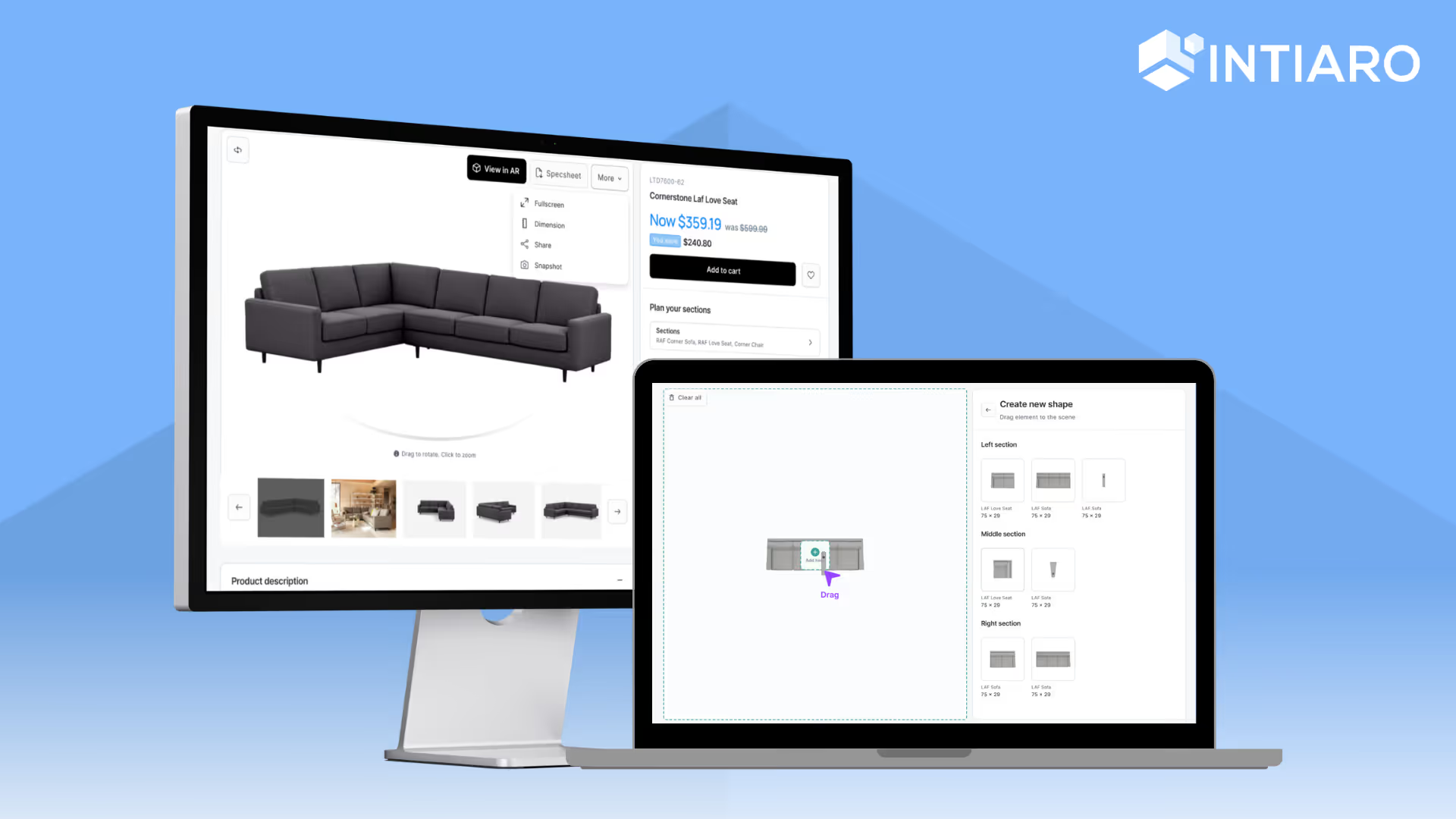
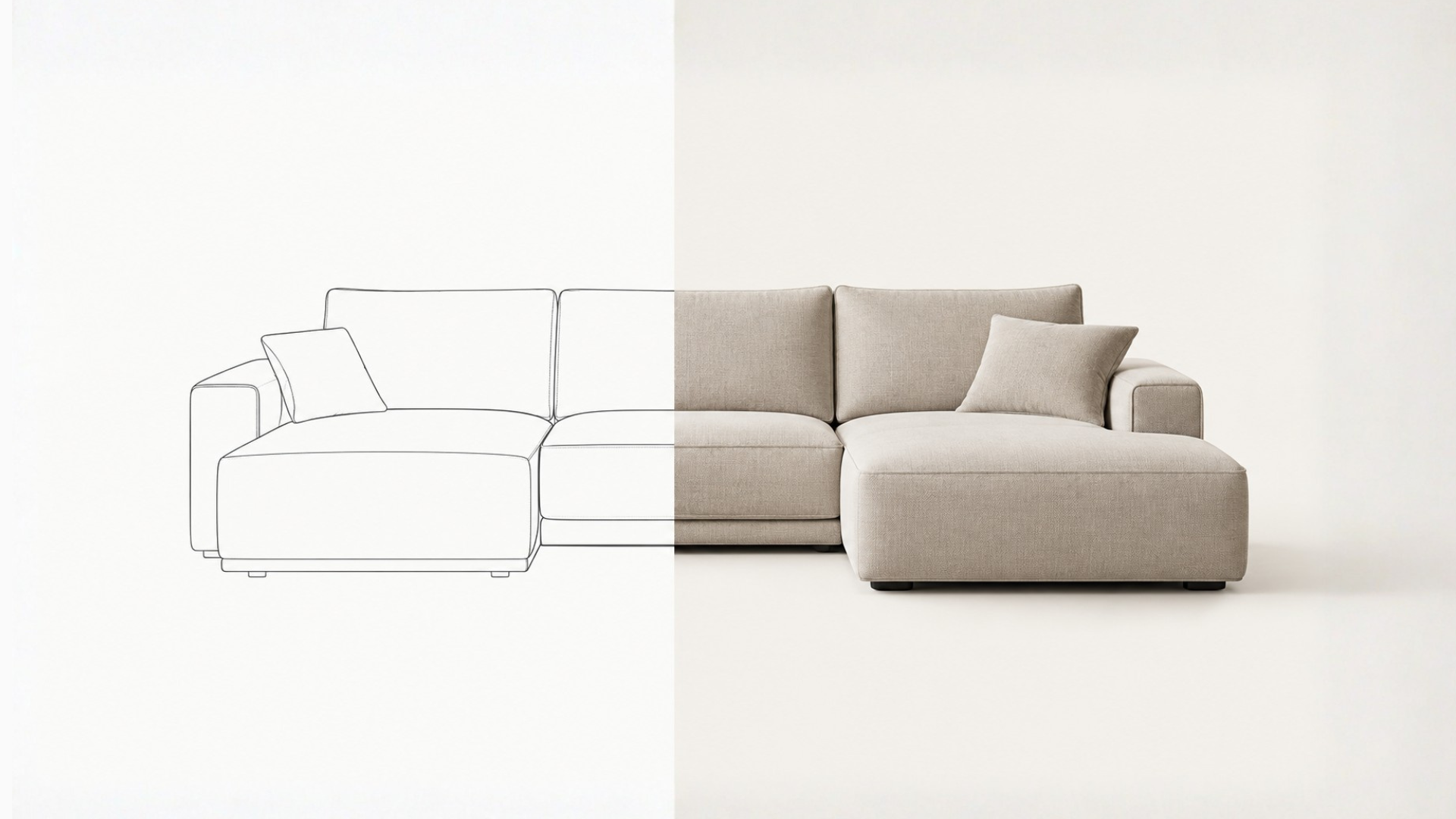
A 3D furniture configurator translates structured product data into real-time visualization. Every available configuration can be displayed instantly, without relying on physical inventory or outdated materials.
Real-Time Configuration Improves Retail Close Rates
When customers can see exactly what they are buying, hesitation decreases.
A 3D configurator allows sales reps to update fabrics, finishes, layouts, and dimensions in seconds. Instead of describing possibilities, they demonstrate them.
This has direct impact on performance:
- Faster decision-making
- Higher customer confidence
- Shorter sales cycles
- Fewer abandoned quotes
Visualization removes ambiguity. Customers move from imagining a product to evaluating a fully configured version of it. That clarity is especially important in high-consideration purchases like furniture.
Reducing Order Errors Protects Margin and Reputation
Retail errors are expensive. Incorrect fabrics, incompatible modules, discontinued finishes, or miscalculated dimensions can lead to returns, remakes, delays, and damaged dealer relationships.
These mistakes often result from fragmented information and manual processes.
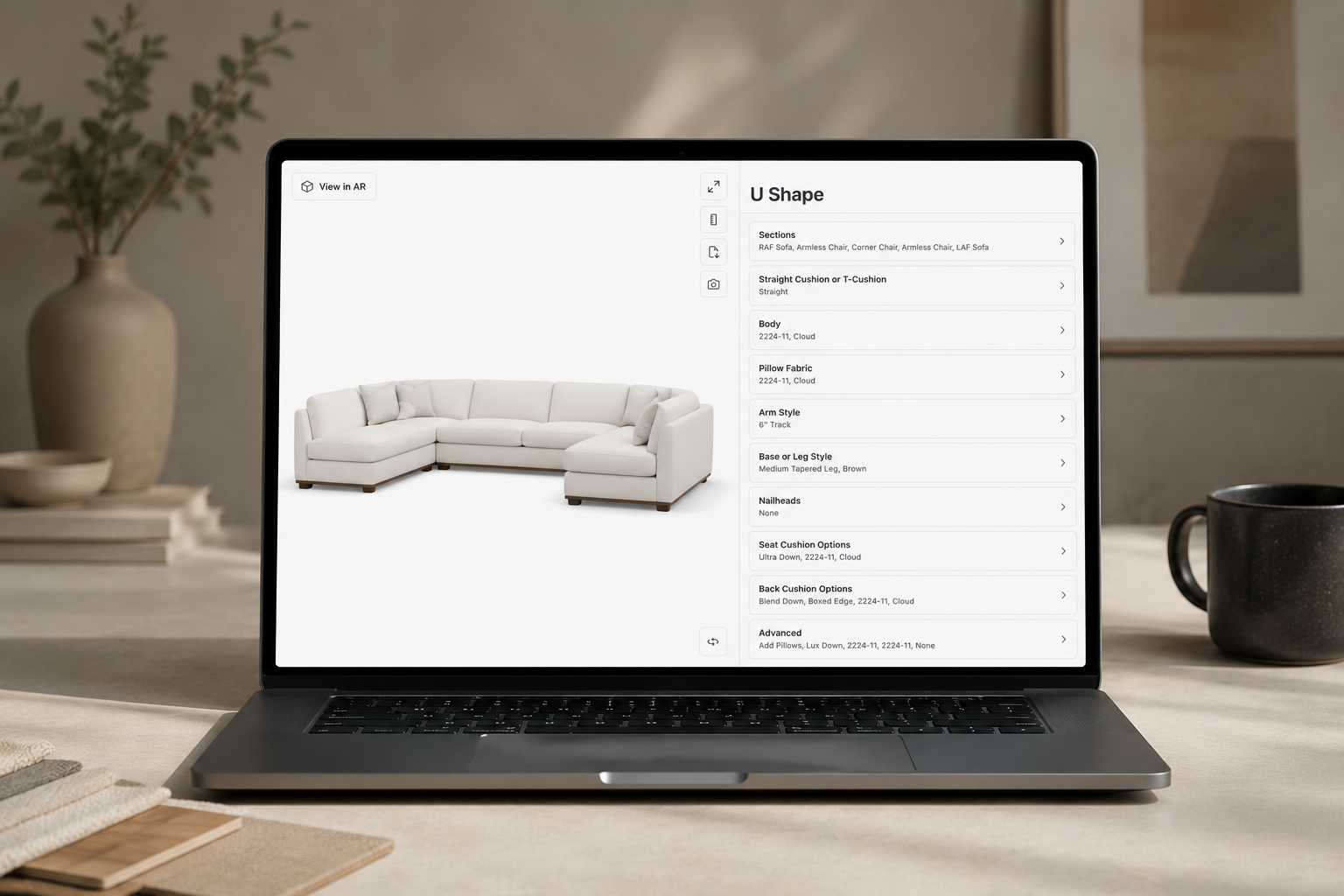
When product logic is embedded directly into a 3D configuration system, incompatible selections can be prevented. If a fabric is removed from the assortment, it disappears from the configurator immediately. Accurate dimensions can be displayed on demand without manual measuring.
Everything shown reflects current product data.
For brands operating through dealer networks, this consistency reduces costly mistakes and protects both margin and reputation.
Visual Upselling Increases Average Order Value
Upselling is most effective when customers clearly understand the value of an upgrade.
When premium materials, larger configurations, or upgraded finishes are visualized in high detail, the difference becomes tangible. Sales reps can compare options side by side, helping customers make informed decisions without pressure.
Instead of “selling harder,” the process becomes “showing better.”
That shift typically results in higher average order value and smoother sales conversations.
From Visualization to a Connected 3D Sales Workflow
At Intiaro, the configurator is designed as the foundation of a connected retail sales ecosystem.
Modules such as COM validation, integrated pricing logic, and WebAR extend configuration into a structured 3D sales cycle. Sales teams can configure products accurately, validate customer materials, generate reliable pricing, and even place products digitally into a customer’s space.
This creates alignment between product data, visualization, and sales execution across retail locations.
For furniture brands scaling through dealer networks, that alignment improves consistency, efficiency, and overall retail performance.

The Bottom Line
A 3D configurator gives retail sales teams clarity, accuracy, and speed.
It enables dealers to show every configuration in real time, prevents costly order mistakes through embedded product logic, and makes upselling easier by visualizing premium options instantly.
For furniture brands working through dealer networks, that means higher close rates, better order accuracy, and stronger retail performance.
On the showroom floor, the brands that are easiest to understand are the easiest to sell.
Related posts

Interested in our solutions?