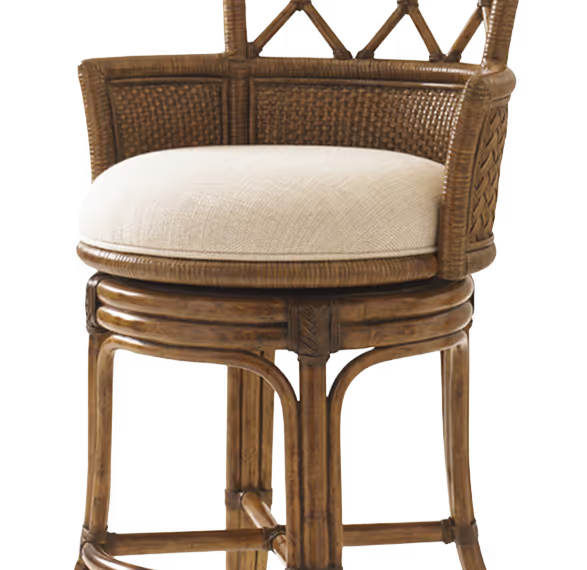
From 3D Model to Campaign-Ready Image in Minutes
Furniture brands are under constant pressure to launch faster, present more configurations, and keep visual quality consistent across ecommerce, retail, and marketing channels. Yet traditional content workflows still rely on reshoots, manual edits, and fragmented asset management. That model does not scale.

Modern furniture visualization begins with a single, accurate 3D model. When that model is connected to a structured content system and AI-driven scene generation, it becomes more than a render. It becomes a content engine.
The shift from static production to scalable generation is changing how furniture brands create campaign-ready imagery.
It starts with precision.
A detailed 3D model captures exact geometry, materials, finishes, and configuration logic. Unlike photography, which captures only one moment in one setup, a 3D model represents the full product structure. Every fabric, finish, or layout variation exists within that controlled digital foundation.
From there, AI Photo Studio enables brands to generate scenes directly from the model. Instead of organizing a photoshoot for each environment, teams can select a background stage, adjust camera angles, define lighting, and create multiple visual directions in minutes. The interface allows for controlled generation rather than unpredictable output, ensuring the product remains accurate in scale and proportion.
This is where AI becomes strategic rather than experimental.
Because the imagery is generated from precise 3D geometry, brands avoid common generative errors such as distorted dimensions, inconsistent material mapping, or unrealistic product placement. The result is lifestyle imagery that is both visually compelling and technically reliable.
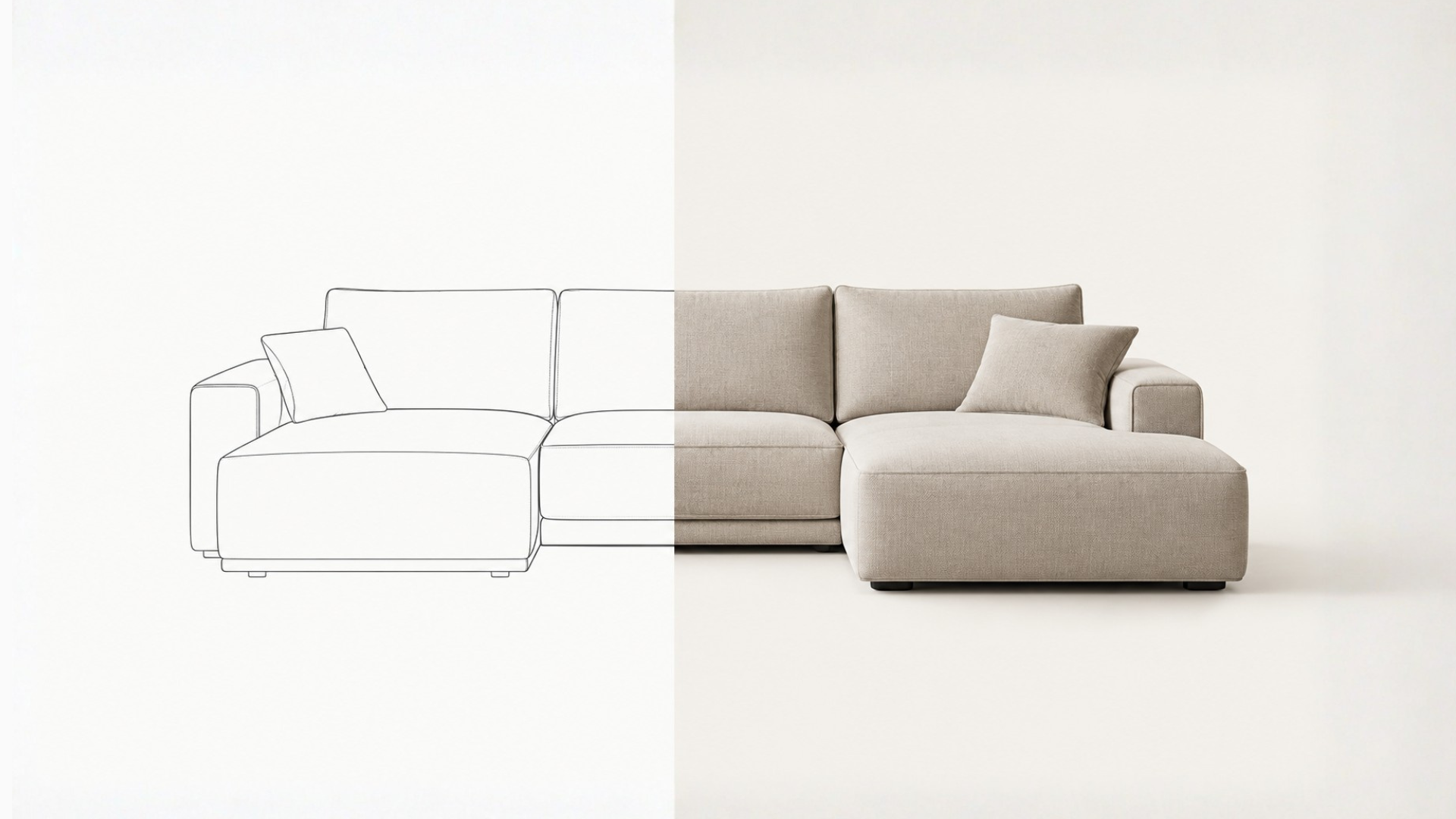
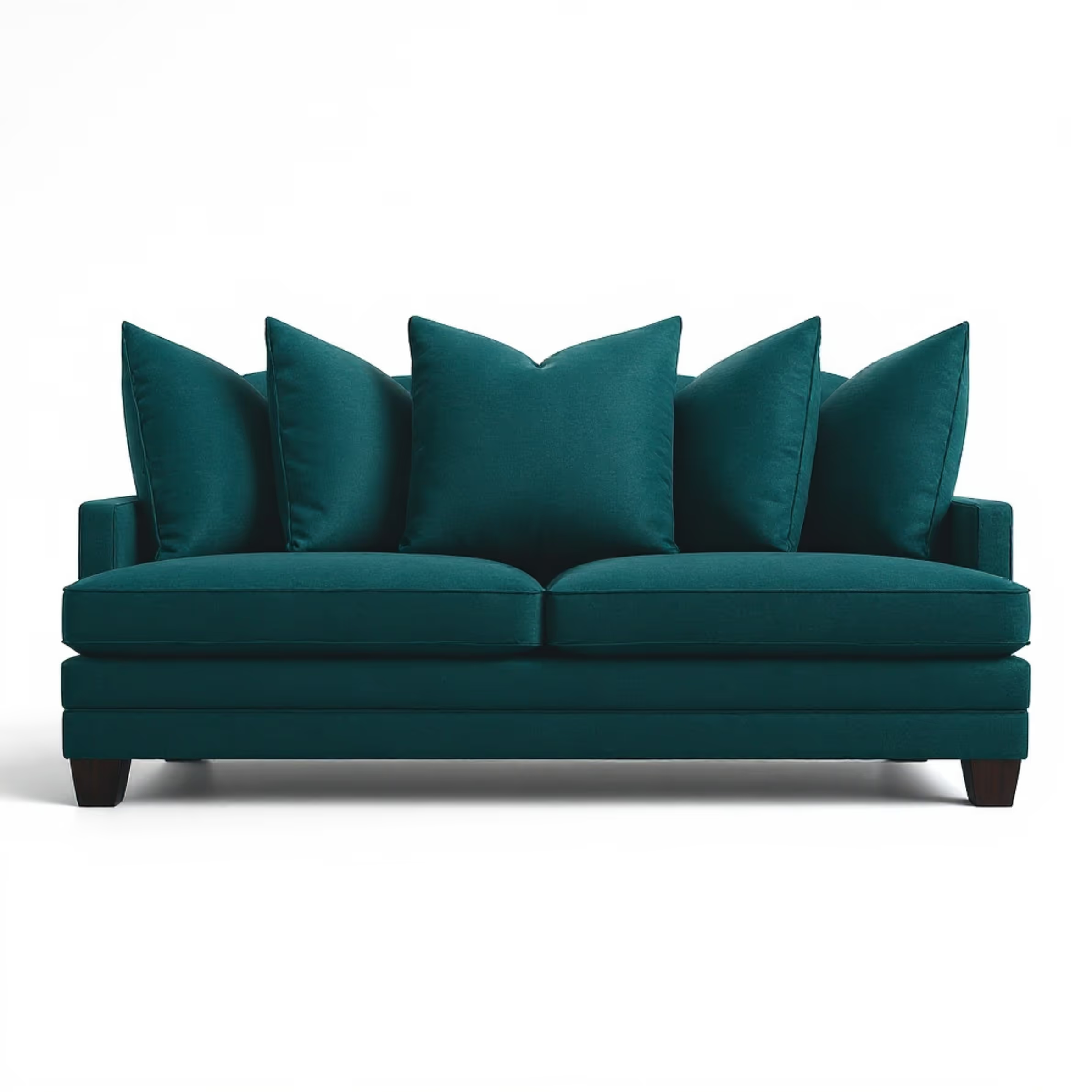
At the same time, the same 3D source can produce high-resolution studio silos suitable for ecommerce platforms, marketplaces, dealer portals, and digital catalogs. Instead of separating lifestyle imagery and product cutouts into different workflows, everything originates from a single model.
This unified approach eliminates repeated production cycles. When a new fabric is introduced or a configuration changes, updated visuals can be generated immediately without scheduling a reshoot or rebuilding assets from scratch.
Speed increases. Consistency improves. Operational friction decreases.
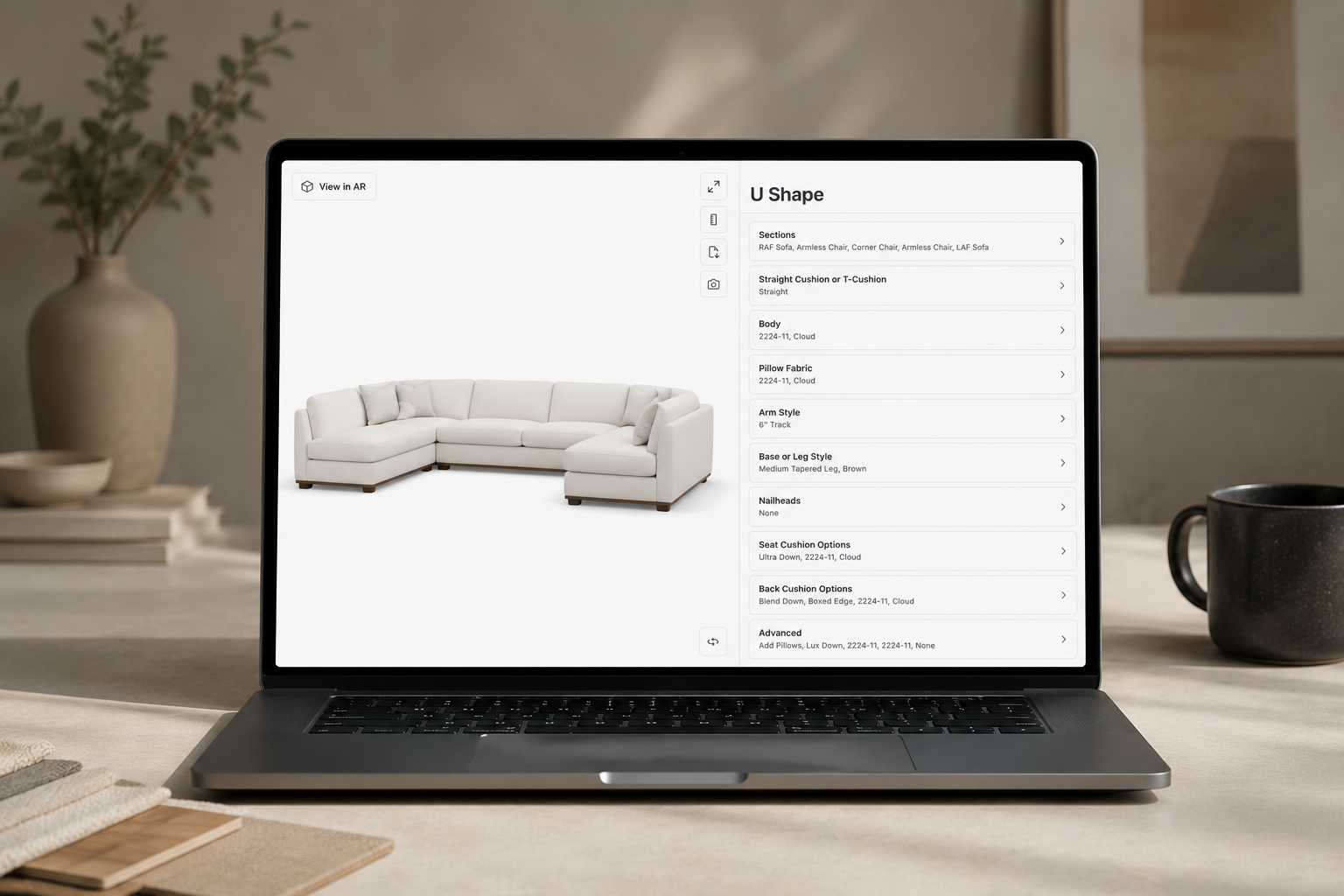
For furniture manufacturers managing large assortments, the impact compounds quickly. A sectional with multiple layouts and hundreds of fabric options no longer requires selective photography. All valid configurations can be visualized accurately and exported for marketing campaigns, ecommerce listings, or retail tools.
The shift is not simply about replacing photography. It is about building a scalable visualization infrastructure.
In a market where product differentiation is increasingly subtle, visual execution plays a critical role in conversion. Customers expect to see accurate representations of the exact configuration they are considering. Retailers expect brands to provide complete digital support. Marketing teams need flexibility to launch campaigns without production delays.
A single 3D model connected to AI-driven scene generation and high-resolution output transforms content creation from a bottleneck into a competitive advantage.
From model to lifestyle image. From configuration to studio silo. From product data to campaign-ready visual. All in minutes.
Ready to transform your 3D models into scalable, campaign-ready visuals?
Explore how AI Photo Studio enables controlled scene generation and high-resolution product imagery from a single source.
Related posts
Interested in our solutions?