More Variants Shown. More Products Sold. One 3D Model.
For many furniture brands, creating a 3D model is the first step toward launching a product configurator. But once that structured model exists, its value goes far beyond configuration alone.
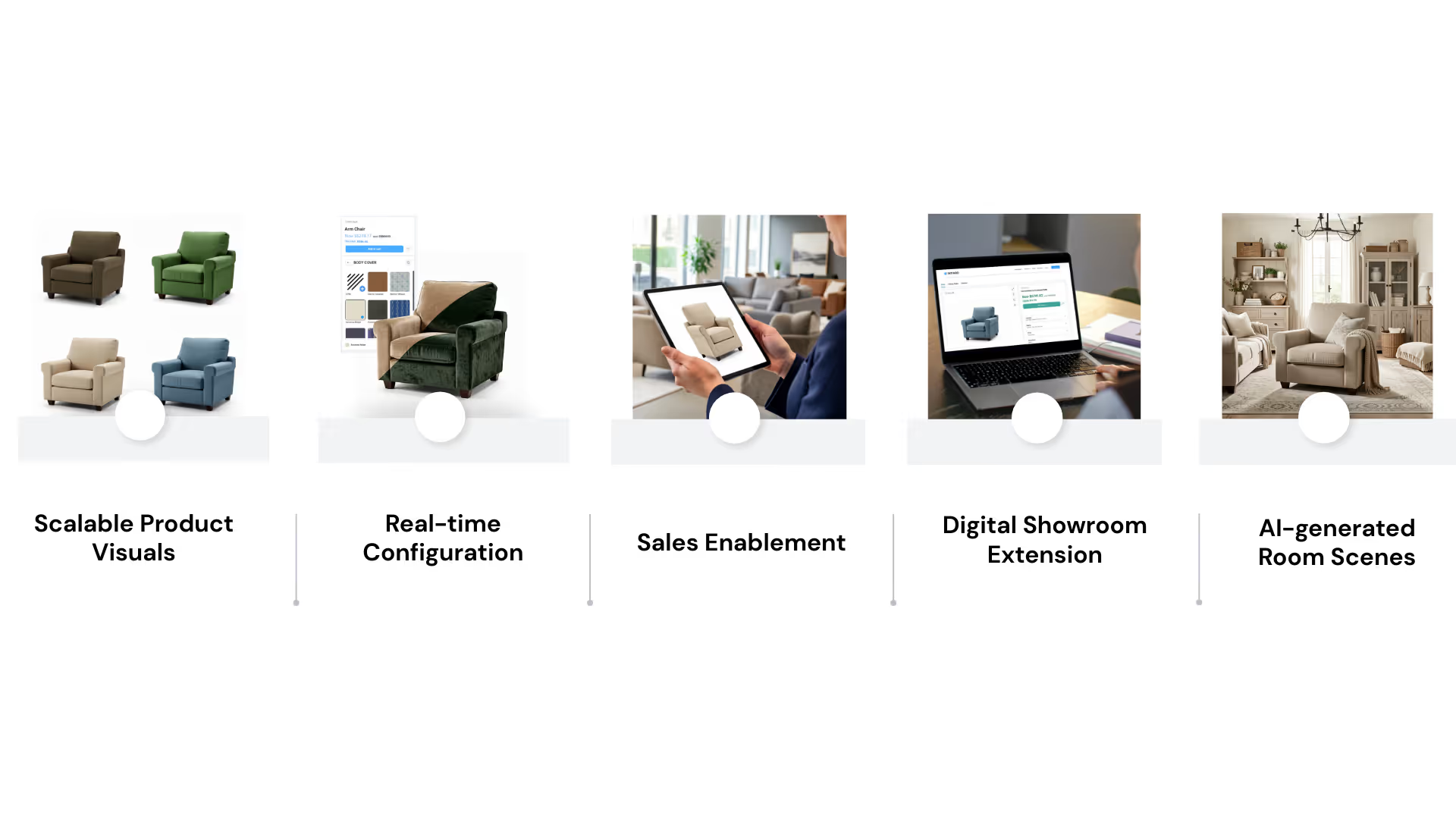
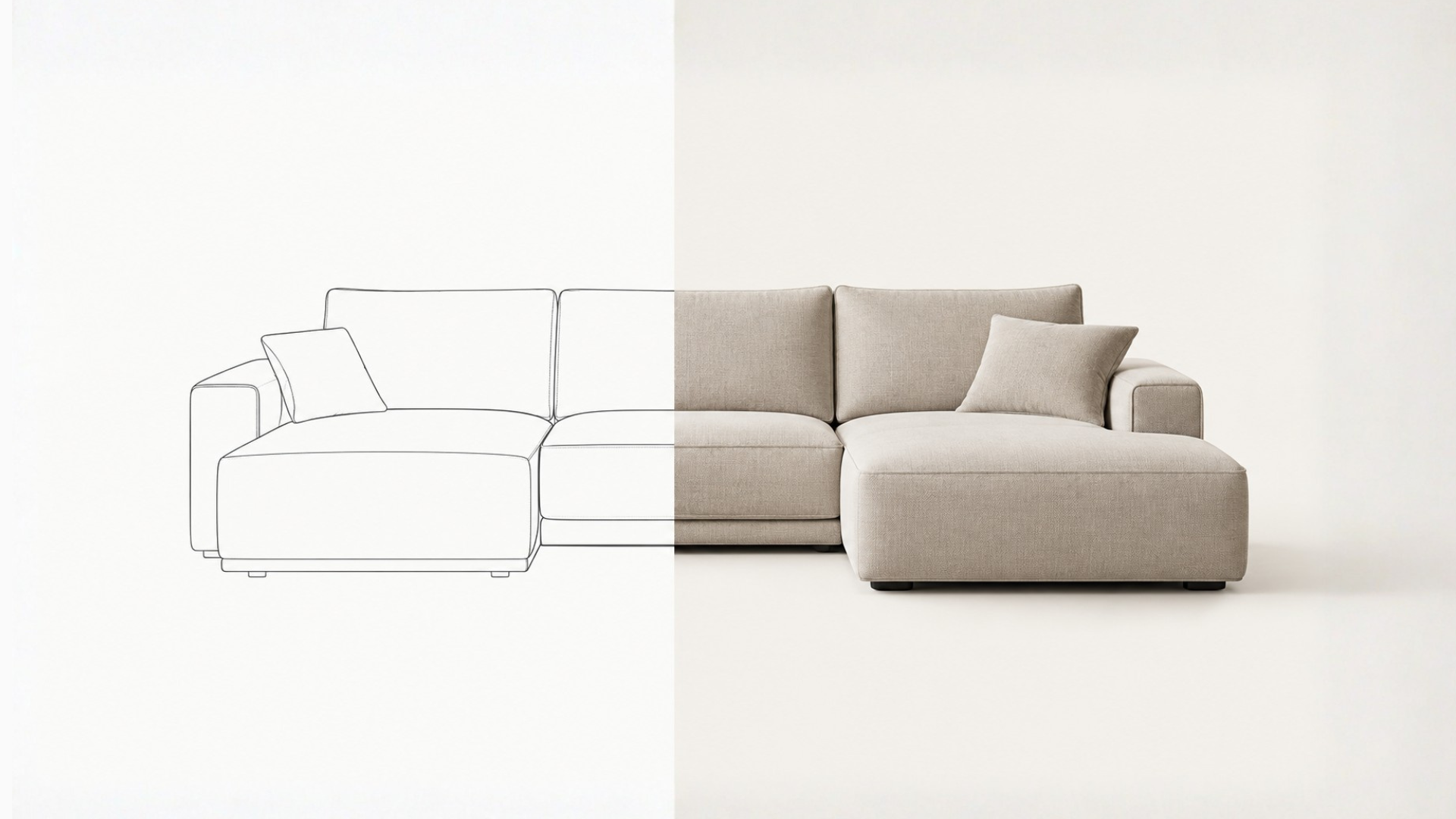
A 3D model is not just the engine behind a configurator. It is the foundation of a scalable content system. When built and managed correctly, a single model can power product pages, dealer tools, sales presentations, showroom extensions, and AI-generated lifestyle imagery without repeated photoshoots or duplicated production work. The brands that see the highest return are not simply implementing a configurator. They are building their entire visualization strategy around the model itself.
Furniture assortments continue to expand. More fabrics, more finishes, more modular combinations. Keeping visuals updated through photography alone quickly becomes expensive and operationally complex. With a structured 3D model, every approved material and configuration can be visualized consistently. When a fabric is discontinued or a new finish is introduced, visuals update systematically. There is no need to reshoot hero images or manually recreate marketing assets. Instead of limiting what is shown, brands can confidently present the full sellable assortment across ecommerce, dealer portals, and marketing campaigns.
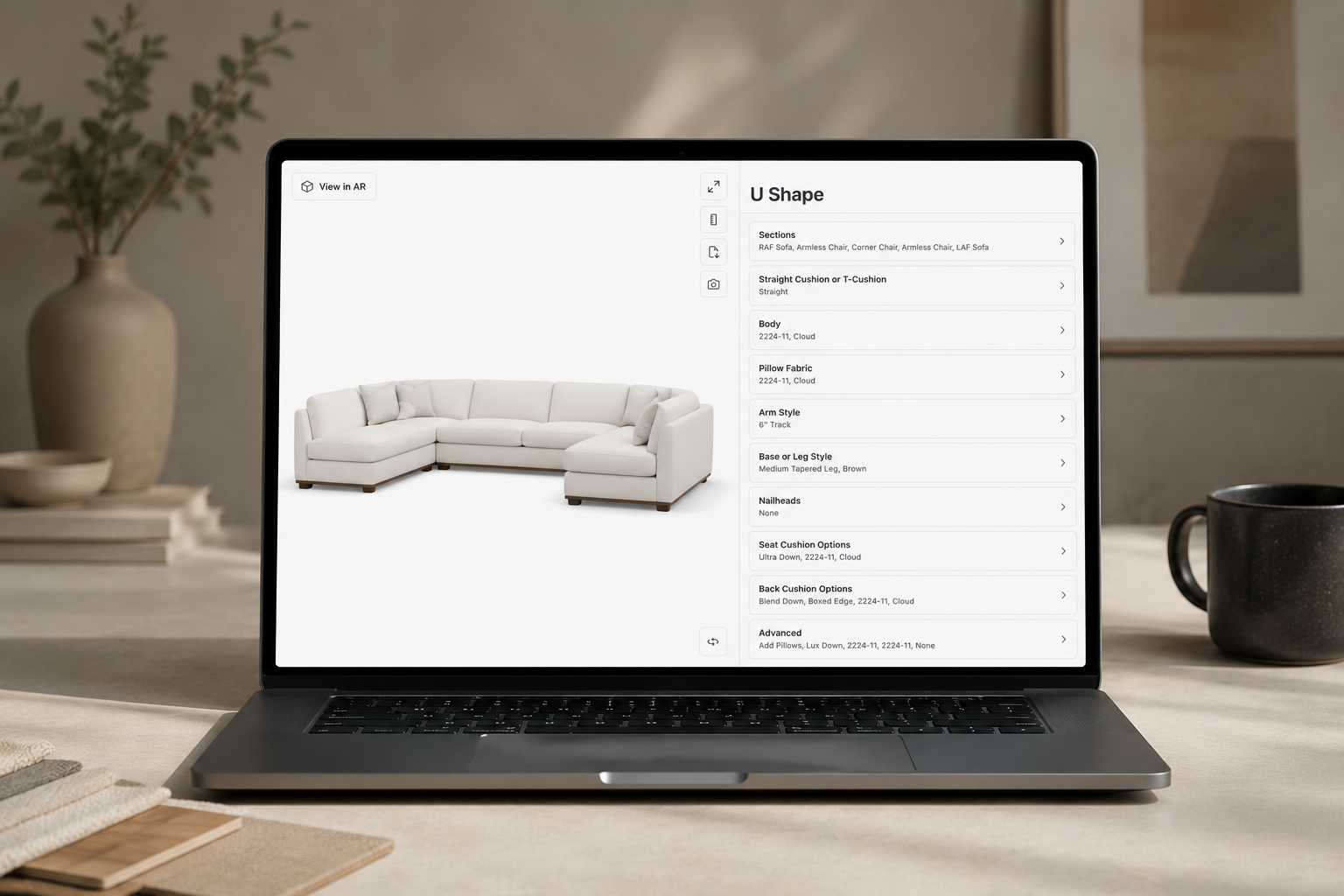
Complex upholstered and modular products are difficult to explain through static PDFs or flat imagery. Customers and retail sales associates often struggle to visualize what a configuration will actually look like. A 3D model enables real-time configuration, allowing options to be explored instantly while changes are visualized live. This removes ambiguity and builds buyer confidence. Complex products become easier to understand, easier to present, and ultimately easier to sell. For sales teams, this shortens conversations. For customers, it reduces friction.
Traditional sales materials age quickly. PDFs become outdated as soon as a finish changes or a new SKU is introduced. When powered by 3D, sales teams can present interactive product visuals instead of static documents. Every available option is clearly displayed, reducing miscommunication and improving perceived product value. Representatives no longer rely on imagination or incomplete sample sets. They can demonstrate the exact configuration being discussed, improving clarity and accelerating decision-making.
Physical showrooms cannot display every SKU or sectional layout. Floor space is limited, but assortments are not. A 3D model allows brands to extend the showroom digitally. Retailers and brand representatives can present the full collection during dealer meetings, market events, or in-store consultations. Even complex sectional combinations can be visualized on demand. Instead of choosing which products to show, brands can show everything they sell without increasing physical footprint.
Beyond configuration and sales tools, a structured 3D model also supports scalable marketing imagery. AI-powered room scenes can be generated directly from the same product data, enabling brands to create campaign-ready lifestyle visuals tailored to different markets, audiences, or seasonal themes without building every scene manually. The result is faster content production, consistent product accuracy, and the flexibility to adapt visuals by region, channel, or campaign objective.
When treated as a central content source rather than a one-time deliverable, a 3D model becomes a strategic growth asset. It powers ecommerce visualization, supports real-time configuration, strengthens sales enablement, extends showroom capabilities, and accelerates AI-driven content production. The competitive difference is not whether a brand has 3D models. It is whether those models are integrated into a scalable visualization and content lifecycle strategy.
Because when more variants are shown accurately and consistently, more products are sold.

If you want to turn one 3D model into a scalable engine for configuration, sales, and AI-driven marketing content, let’s talk. We’ll show you how to structure your models for long-term flexibility and connect them to a visualization platform that supports your entire content lifecycle — from ecommerce to showroom to campaign imagery.
Related posts

Interested in our solutions?