What 2025 Revealed About Furniture Manufacturing - And What It Means for 2026
In 2025, furniture manufacturers continued to invest in digital tools and process change. Insights from the pAIn Survey, captured across multiple months in 2025 through conversations with CEOs, CMOs, CIOs, and operational leaders, reveal a consistent pattern. Execution slowed not because of missing ambition, but because back-end systems, onboarding workflows, analytics, and content pipelines created friction between decisions and delivery. Going into 2026, that friction is shaping how fast companies can move.
The industry is investing, but execution is where it breaks
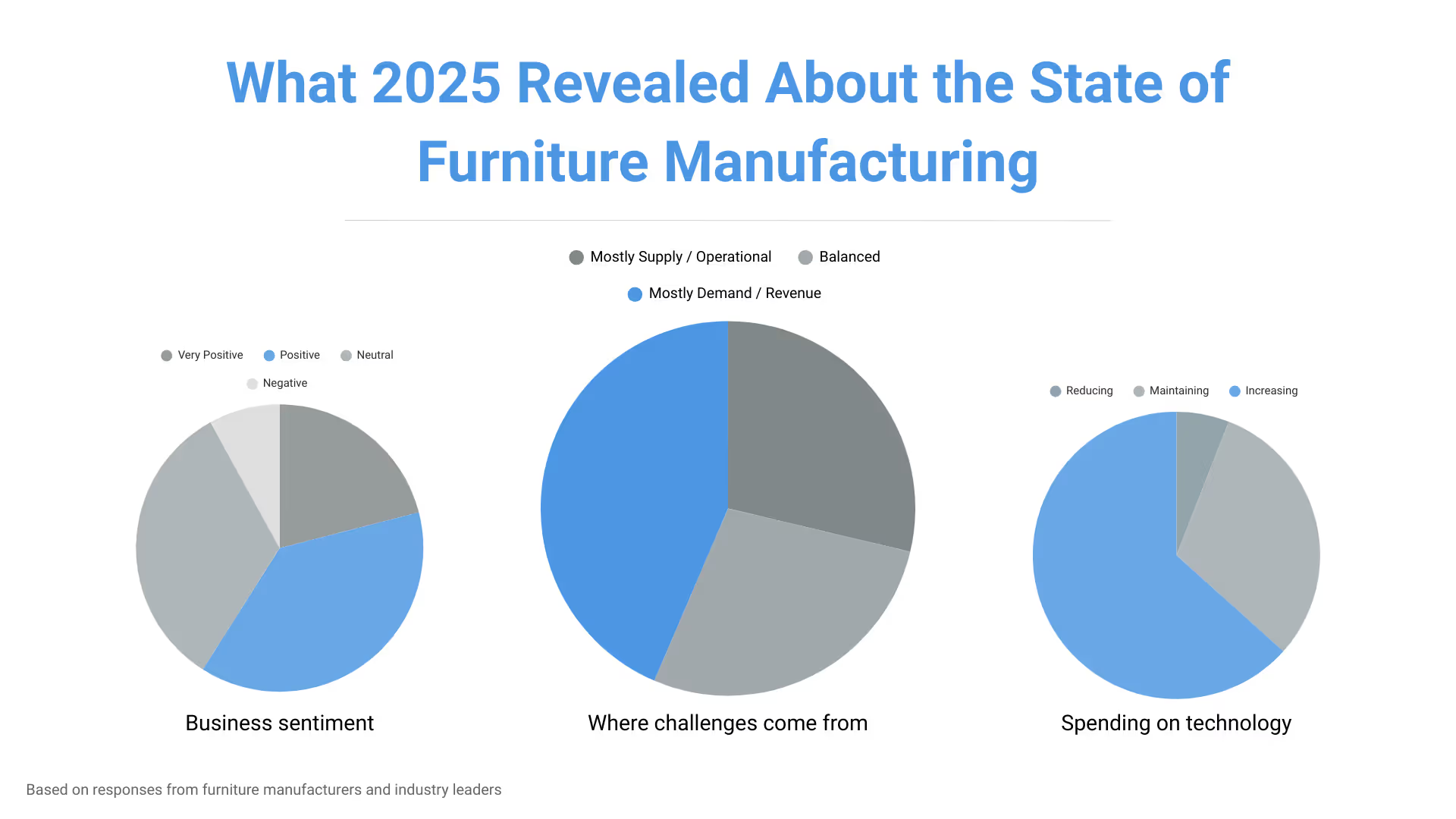
Business sentiment across respondents remained largely positive or neutral throughout 2025. Most companies reported plans to maintain or increase spending on digital technology. ERP upgrades, new platforms, and internal tooling were already in motion.
Despite that, progress often felt slower than anticipated.
“We are investing, but everything takes longer than it should. The friction shows up after decisions are made.” - CEO, US-based furniture manufacturer
This disconnect between investment and execution is the defining pattern of 2025. It is not about resistance to change. It is about how change moves through the organization.

Back end systems and integration emerged as the top constraint
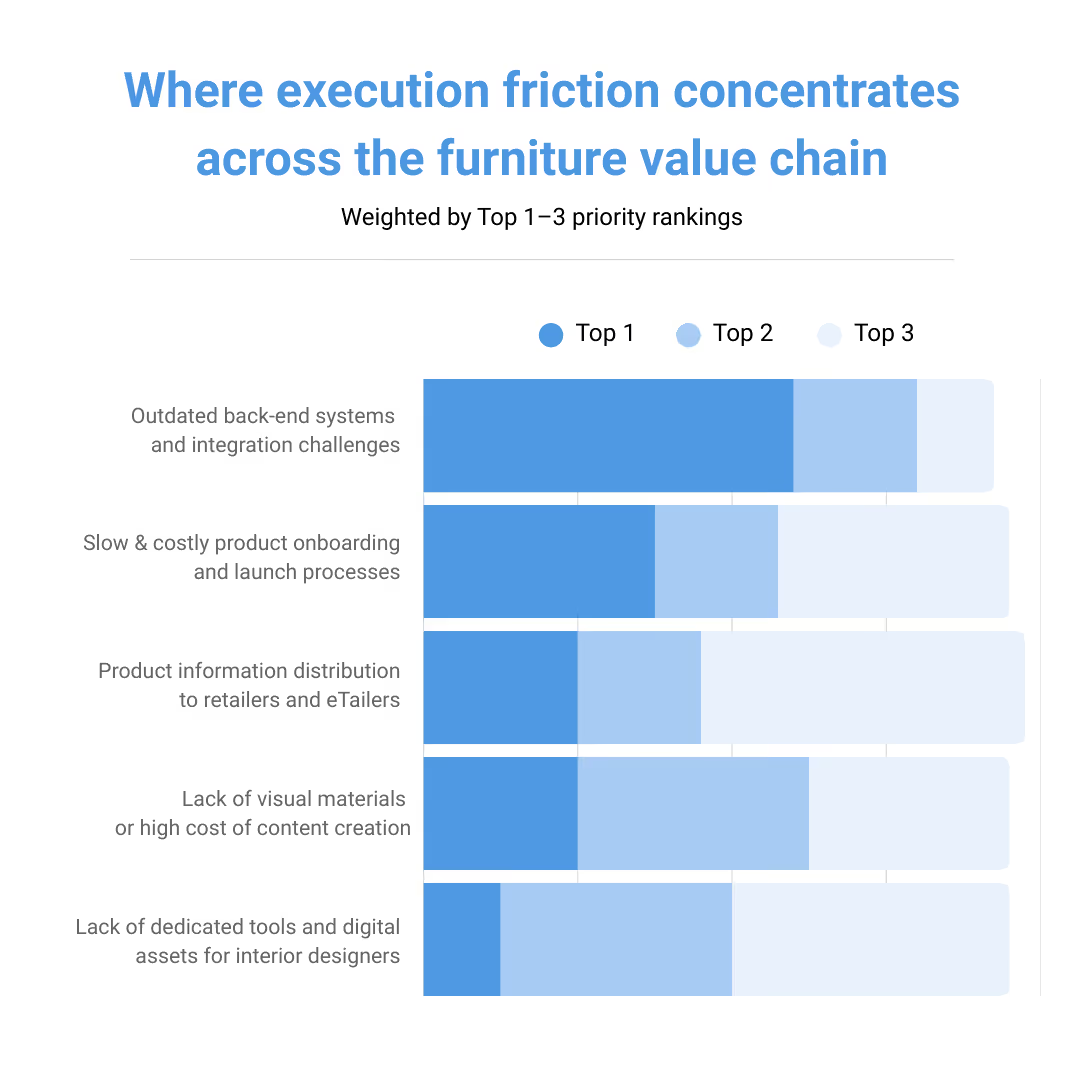
The most heavily weighted pain point in our analysis was outdated back end systems and integration challenges. This ranked higher than any other category, cutting across company size and business model.
Legacy ERPs, custom systems, and partial cloud migrations created environments where data existed, but did not flow cleanly between teams or tools.
“Getting data from one system to another takes more effort than it should. That slows everything downstream.” - CIO, US-based legacy furniture manufacturer
This limitation rarely stays contained within IT. In 2025, it directly affected launch timelines, analytics visibility, and customer facing processes.
Across the pAIn Survey, respondents identified nine recurring sources of execution friction. The chart highlights how the five most heavily weighted areas stacked up based on Top 1 - 3 priority rankings. Beyond these, respondents also pointed to challenges around fragmented customer and dealer communication, outdated or ineffective online presence, and gaps in product analytics and visibility. Taken together, the results show that friction rarely lives in a single function. It accumulates across systems, data, content, and workflows, slowing execution even when strategic intent is clear.
Slow onboarding and launch processes followed closely behind
Product onboarding and launch processes ranked as one of the most painful areas overall. The issue was not product readiness. It was coordination.
Manufacturers described products that were technically sellable long before they were usable across websites, dealer tools, sales materials, and partner platforms.
“A product can be ready months before it actually shows up everywhere it needs to.” - Head of Operations, vertically integrated manufacturer
In 2025, this gap became harder to justify. Time to market increasingly mattered more than incremental polish.
Customer service overhead revealed downstream consequences
Customer service and order handling overheads also ranked among the top pain areas. Errors, manual corrections, and repeated clarifications were common symptoms.
These issues rarely originated in customer service itself. They appeared when upstream systems failed to align product data, options, pricing, and availability.
“Customer service ends up compensating for problems that start much earlier in the process.” - COO, multi brand furniture manufacturer
The data shows that operational drag compounds. When systems do not connect upstream, the cost appears later and in less visible ways.
Analytics and visibility lagged behind decision making needs
Lack of clear analytics on product performance and operational bottlenecks ranked just below the top tier. Many leaders acknowledged that decisions were still made with limited visibility into what was actually working.
“We do not use data as much as we would like. It exists, but it is not easy to act on.” - CMO, US-based furniture manufacturer
In 2025, analytics was not dismissed as unimportant. It was deprioritized because accessing reliable insight often required too much manual effort.
Content creation pressure shifted from cost to coverage
High cost of content creation remained a concern, but the nature of the problem evolved. The challenge was no longer creating content once. It was maintaining coverage across every channel where products needed to appear.
Websites, dealer portals, marketplaces, sales tools, and designer workflows all demanded up to date visuals and data.
“It is not just about creating content. It is about keeping it usable everywhere.” - CMO, US-based furniture manufacturer
This is why many teams began exploring faster visual pipelines in 2025, including AI assisted imagery and scalable scene generation. Not as replacements for traditional photography, but as ways to reduce bottlenecks and extend reach without restarting production cycles.
Designers highlighted friction rather than demand for new tools
Lack of dedicated tools and digital assets for interior designers ranked lower than core operational pains, but still surfaced consistently.
The insight was not that designers wanted more platforms. It was that friction in accessing usable assets slowed specification and collaboration.
“Designers do not want another system. They want fewer obstacles in the ones they already use.” - VP of Digital, premium furniture brand
This reframing matters going into 2026. Adoption depends less on adding tools and more on removing barriers.
What these signals mean going into 2026
The data does not point to a single failing area. It shows a pattern.
The most painful issues of 2025 were not isolated problems. They were different expressions of the same structural challenge. Systems, data, and workflows exist, but they do not move cleanly across teams or stages of the product lifecycle.
Back end integration issues, slow onboarding, customer service overhead, analytics gaps, and content pressure all reinforce each other when execution lacks flow.
Going into 2026, the companies best positioned to move faster will not necessarily be the ones that invest more. They will be the ones that reduce friction between systems, shorten the distance between decision and execution, and prioritize momentum over theoretical completeness.
2025 made the constraints visible.
2026 will be about deciding which ones to remove.
The insights above reflect patterns observed across furniture manufacturers in 2025. If you want to compare perspectives or discuss what reducing execution friction could look like in your organization going into 2026, we are open to the conversation → Let's Talk
Related posts

Interested in our solutions?