Arrange 3D for Apple Vision Pro: Bringing 3D Furniture Into Real Spaces
Furniture decisions are inherently spatial. Scale, proportion, and placement matter as much as materials or finishes. Yet most digital tools still ask users to evaluate furniture on flat screens, detached from the physical environments where products are ultimately used. Spatial computing introduces a different approach.
Arrange 3D is Intiaro’s mixed reality solution designed for Apple Vision Pro, allowing furniture products to be placed and experienced directly within real spaces. Using spatial computing, digital furniture is anchored at true scale, positioned within the room, and viewed from natural perspectives as users move around it.
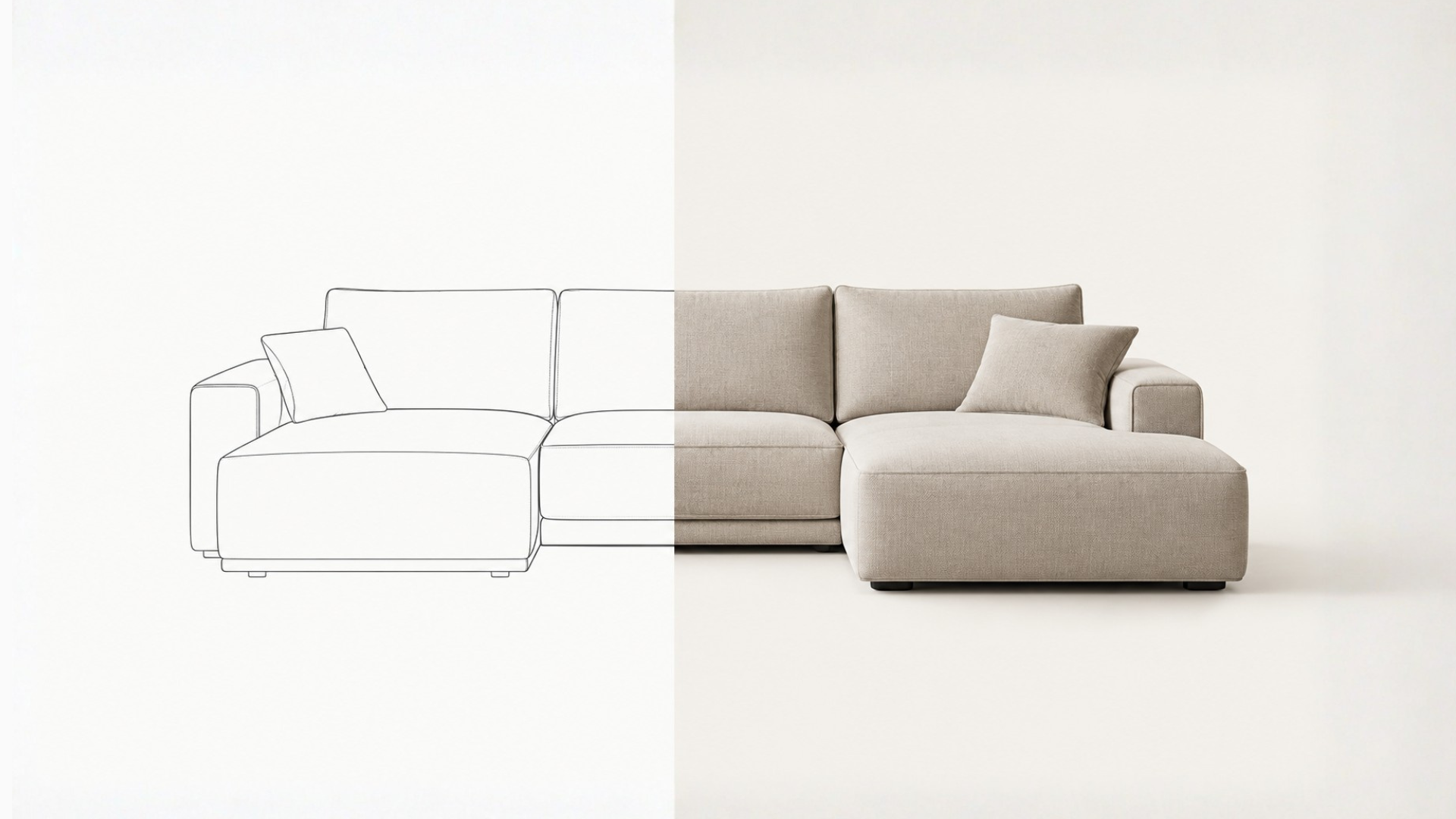
Rather than creating a separate visualization workflow, Arrange 3D builds on structured product data. Furniture geometry, dimensions, and configuration logic are translated into a mixed reality experience that remains consistent with how products are defined across other digital channels. This ensures that what appears in mixed reality reflects real product parameters, not simplified approximations.
One of the defining advantages of Apple Vision Pro is spatial accuracy. Products placed using Arrange 3D respect physical dimensions, room layout, and distance, making it possible to understand how furniture truly fits within a space. This is particularly valuable for larger pieces, modular systems, and collections, where context and spacing influence both design and purchasing decisions.

Arrange 3D also introduces a strong opportunity as a marketing and sales tool. In showrooms, it allows brands to present far more products than the physical space could ever hold. Instead of rotating floor models or relying on catalogs and screens, teams can showcase extended assortments, alternative configurations, and complete collections directly within the same environment. A single physical showroom can effectively become a gateway to an entire catalog.
This changes how showrooms are used. Physical space no longer limits what can be presented. Sales teams can guide clients through different layouts, sizes, or styles without moving furniture or switching contexts, while still keeping the experience grounded in the real room around them. For brands with large or highly configurable assortments, this creates a more flexible and scalable way to support in-person selling.
Compared to traditional augmented reality, the difference is substantial. Mobile AR typically places objects through a handheld screen, often with limited depth perception, scale accuracy, and stability. Arrange 3D on Apple Vision Pro uses spatial computing to anchor products directly into the environment, allowing users to walk around them, view them from natural angles, and perceive depth and proportion more intuitively. The experience feels less like viewing an overlay and more like interacting with a digital object that belongs in the space.
This level of immersion also supports earlier and more confident decision-making. By visualizing products in real environments before physical samples or showroom installations are required, brands can reduce reliance on costly prototypes and staged photography. Internal teams can review layouts, validate proportions, and align faster across design, marketing, and sales.
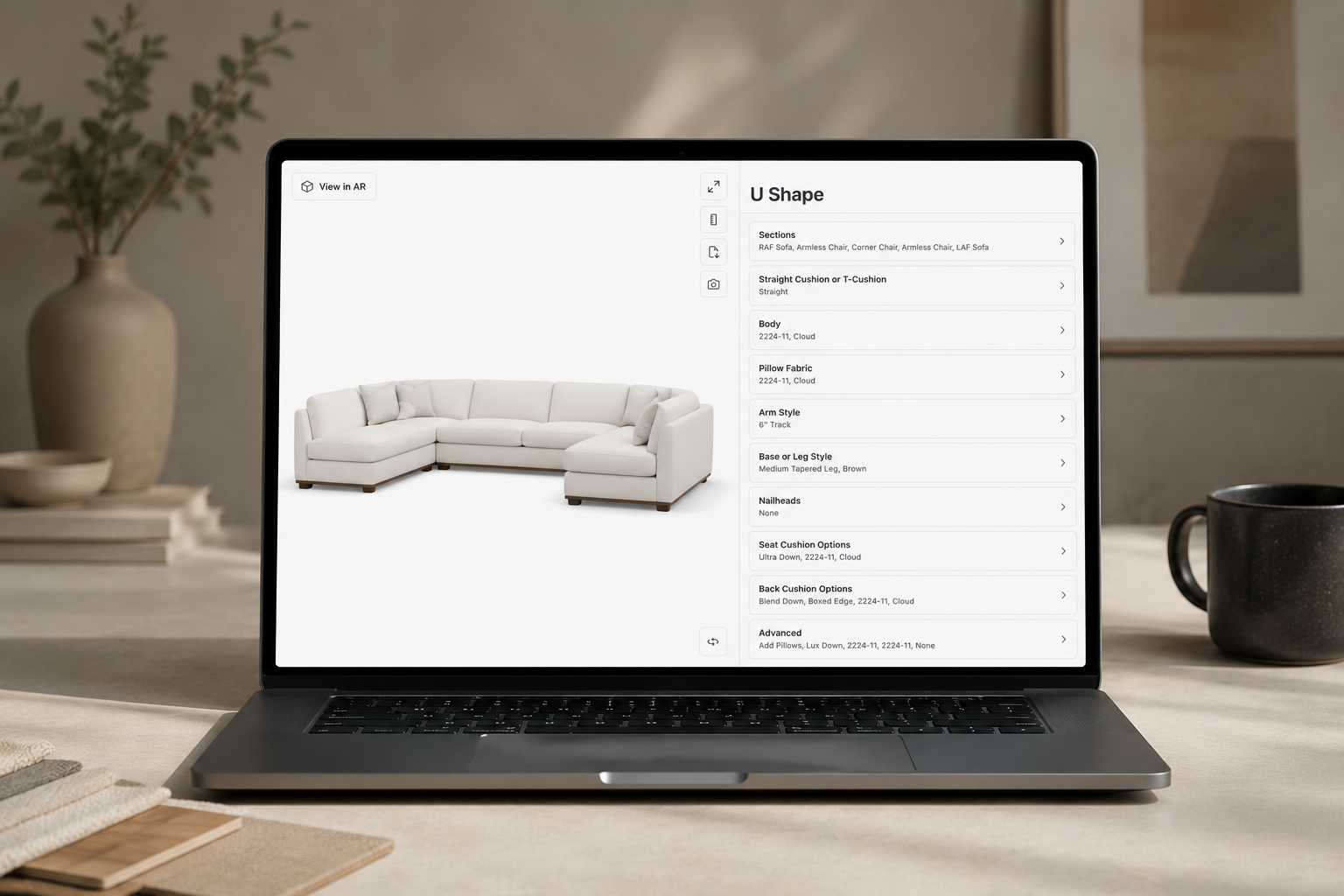
Importantly, Arrange 3D is not intended to replace existing visualization tools. It extends them. Rendered imagery, configurators, and catalogs remain essential, while mixed reality adds a spatial layer that supports understanding, storytelling, and engagement. The value lies not in novelty, but in clarity and flexibility.

For those exploring mixed reality in furniture, Arrange 3D sits at the intersection of product visualization, spatial computing, and showroom enablement. It demonstrates how furniture can be experienced digitally at true scale, using accurate product data, within real spaces. As spatial computing platforms like Apple Vision Pro mature, tools like Arrange 3D point toward a future where experiencing furniture before it exists physically becomes a practical part of marketing, sales, and product presentation.
Explore how generative augmented reality can extend showroom experiences beyond physical space ➡️ Generative Augmented Reality
Related posts

Interested in our solutions?