Over 70% of Shoppers Interact With Products When They Can Customize Them
Across multiple furniture brands, 65–82% of configurator activity comes from real user actions - not passive views. When shoppers are given the ability to customize a product, they don’t just look. They interact.
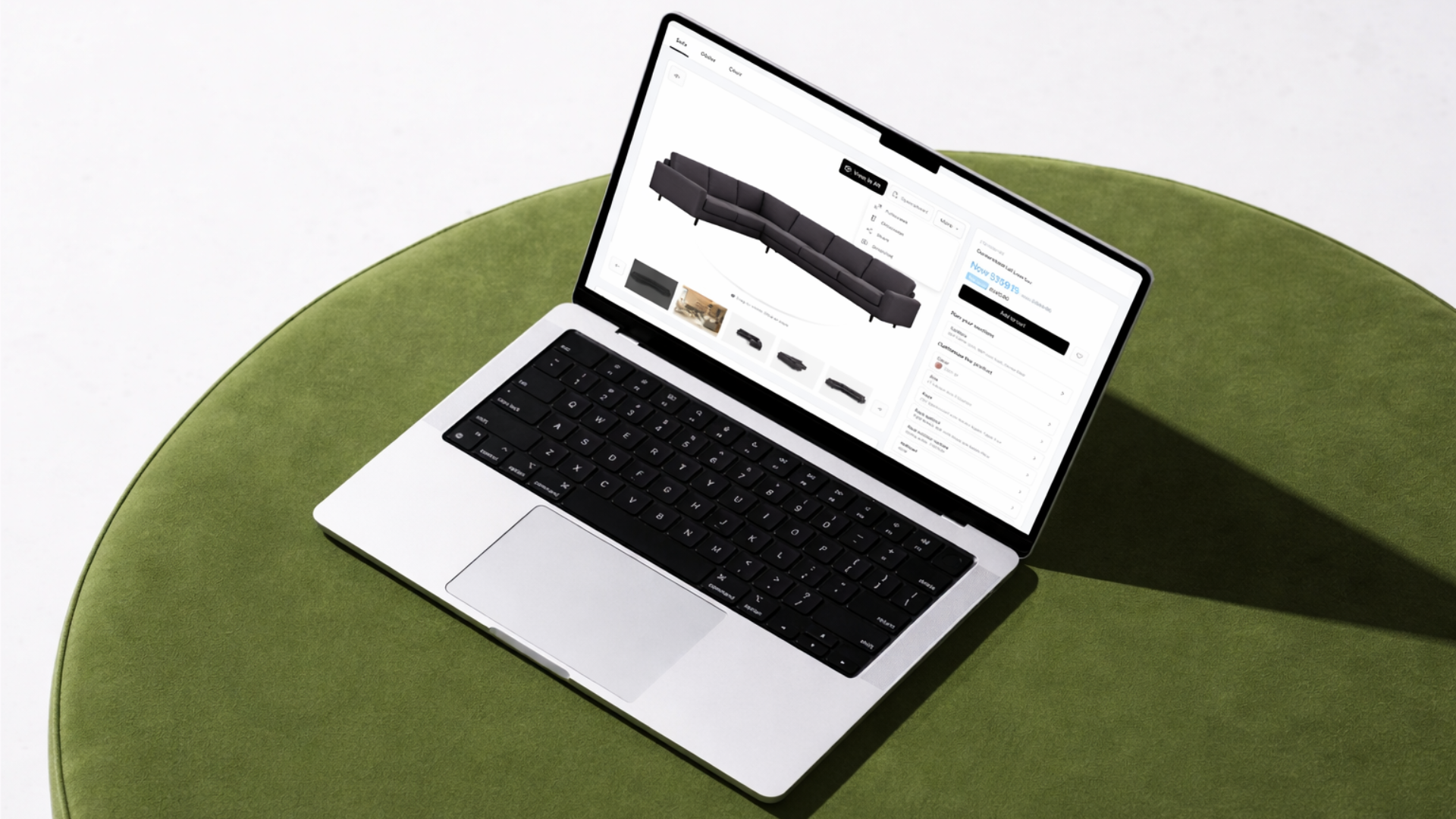
Furniture ecommerce has long struggled with a familiar problem: users browse, scroll, and leave without taking meaningful action. Page views are high, but true engagement remains low, and the gap between discovery and decision is difficult to close. Configurator data challenges that assumption entirely. In one case, after removing bot traffic and correcting how the configurator was triggered on page load, over 70% of all interactions came from real user actions rather than passive views . This is a critical distinction. It means the majority of activity is not driven by accidental exposure or inflated metrics, but by intentional behavior. Once shoppers reach a product they can customize, they begin actively engaging with it instead of simply observing it.
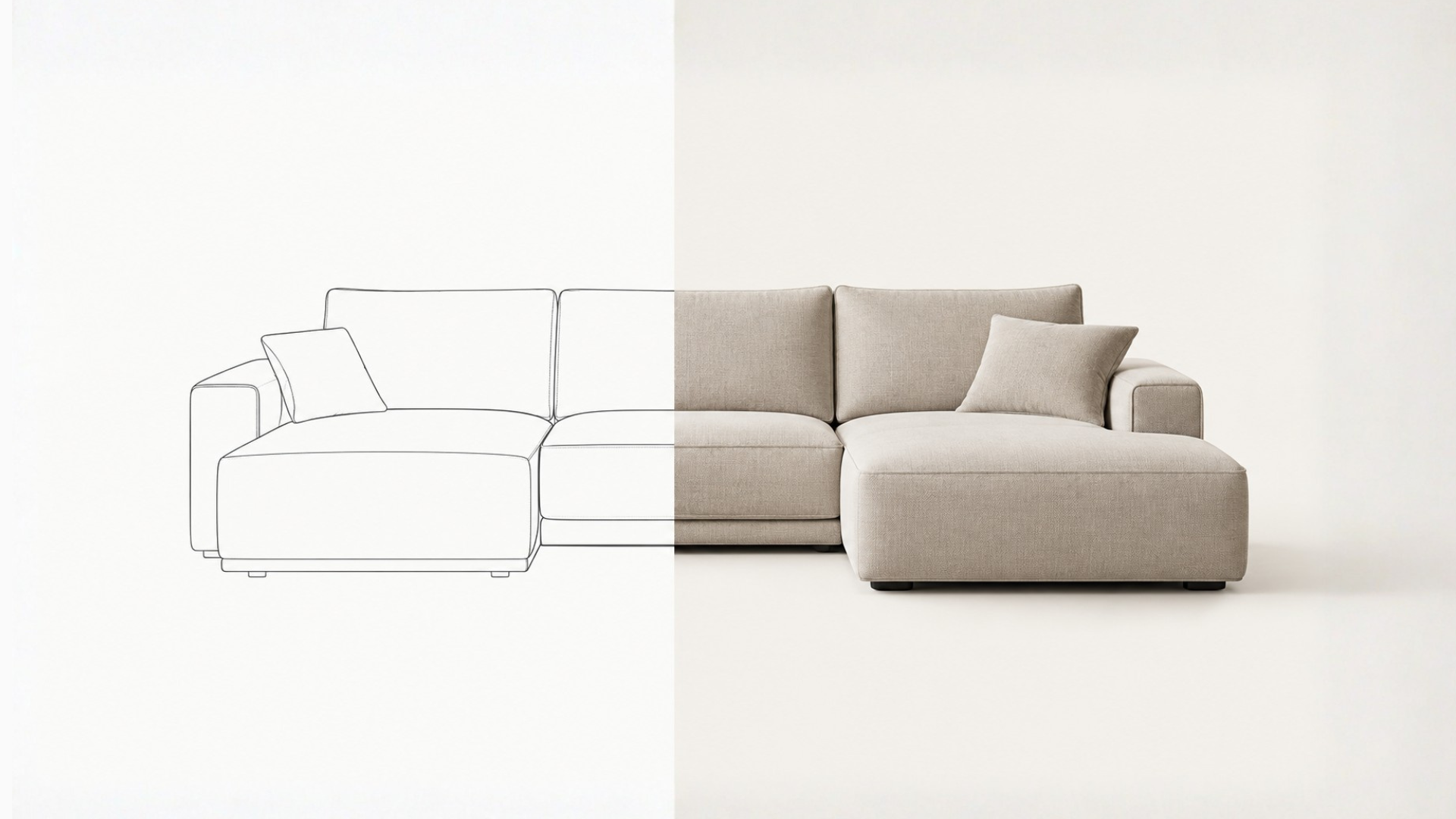
This behavior is not isolated to a single brand or implementation. Across multiple datasets, the same pattern appears consistently. One brand sees 65% of all visualizations driven by user actions, while another reaches as high as 82% . At the same time, users are not interacting once and leaving. They generate between 7.5 and 9 interactions per session, testing different configurations, comparing options, and revisiting variations before moving on. This level of engagement is fundamentally different from traditional ecommerce patterns, where interaction is often limited to clicks between static images. Here, the product becomes something dynamic, and the user becomes an active participant in shaping it. The result is a deeper level of involvement that keeps users on the product longer and moves them closer to a decision.

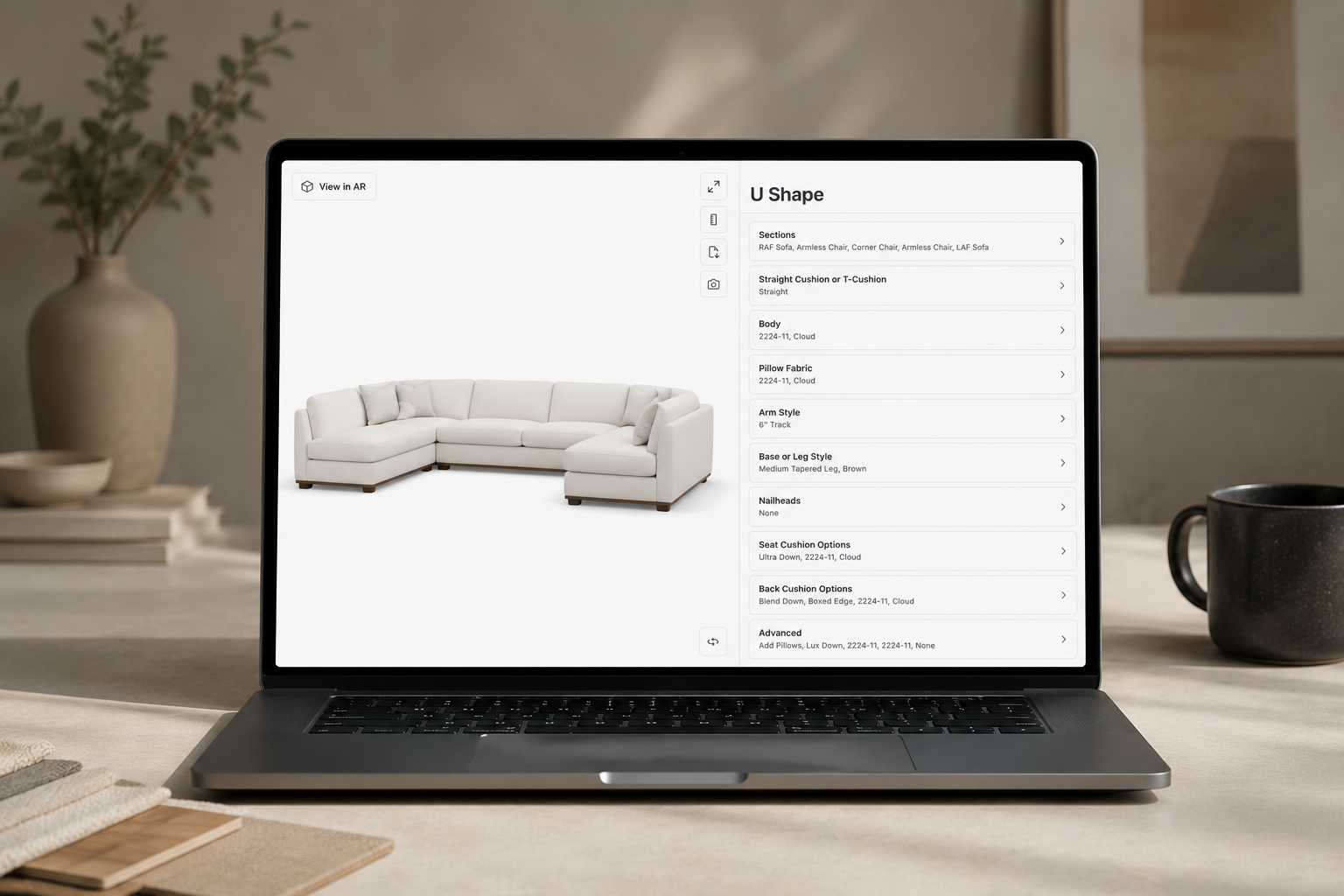
The type of interactions happening inside the configurator makes the intent even clearer. The most common actions are zooming and rotating the product, which are directly tied to inspection and evaluation rather than casual browsing . Shoppers are not just selecting options at random. They are examining materials, checking proportions, and looking at details from multiple angles, much like they would in a physical showroom. This behavior reduces uncertainty, which is one of the biggest barriers to purchase in furniture ecommerce. Without the ability to closely inspect a product, hesitation increases and decision-making slows down. With it, shoppers gain confidence in what they are seeing and are more likely to move forward. The configurator does not just increase engagement - it changes the quality of that engagement from passive viewing to active evaluation.
Related posts

Interested in our solutions?